
The Mastiff dog breed is recognized for its impressive size and dignified demeanor. As one of the largest dog breeds, Mastiffs possess a powerful build and a noble presence that has made them renowned companions throughout history. Their history stretches back over millennia, with European and Asian records indicating their existence and use in various capacities such as guardians and war dogs. Distinguished by their massive, heavy-boned bodies, short dense coats, and a distinctively large and broad muzzle, Mastiffs leave a lasting impression on those who encounter them.
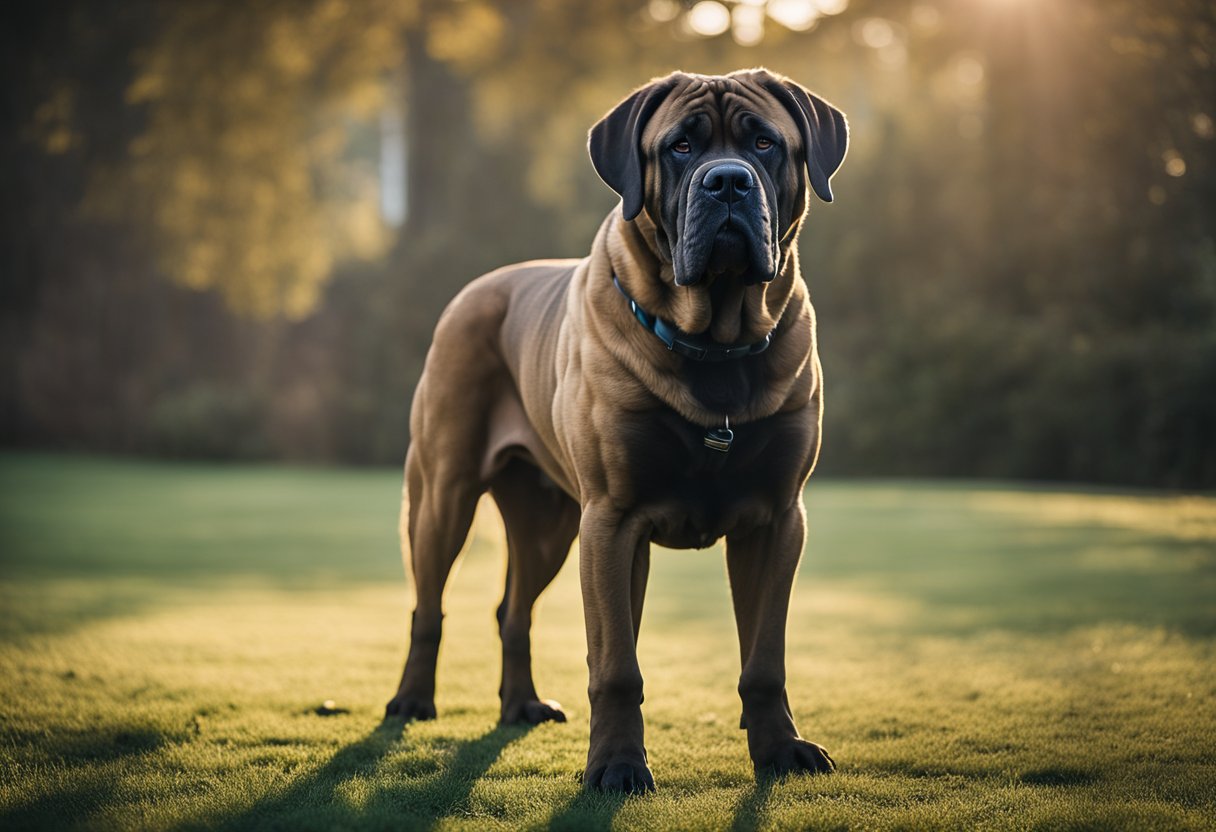
Mastiffs are known for their gentle and affectionate nature, despite their formidable appearance. As a breed that forms strong bonds with their families, Mastiffs are also recognized for their protective instincts. Their temperament makes them suitable for homes where they can be integrated as part of the family unit. In terms of health and care, the breed requires regular exercise, grooming, and a conscientious diet to address potential breed-specific health issues. Training and socialization from a young age are essential for a well-adjusted Mastiff, given their size and strength.
Key Takeaways
- The Mastiff is a giant dog breed known for its size and protective nature.
- They have a long history as guard dogs and companions, requiring regular care and training.
- Despite their size, Mastiffs are affectionate family pets when properly socialized.
History and Origins
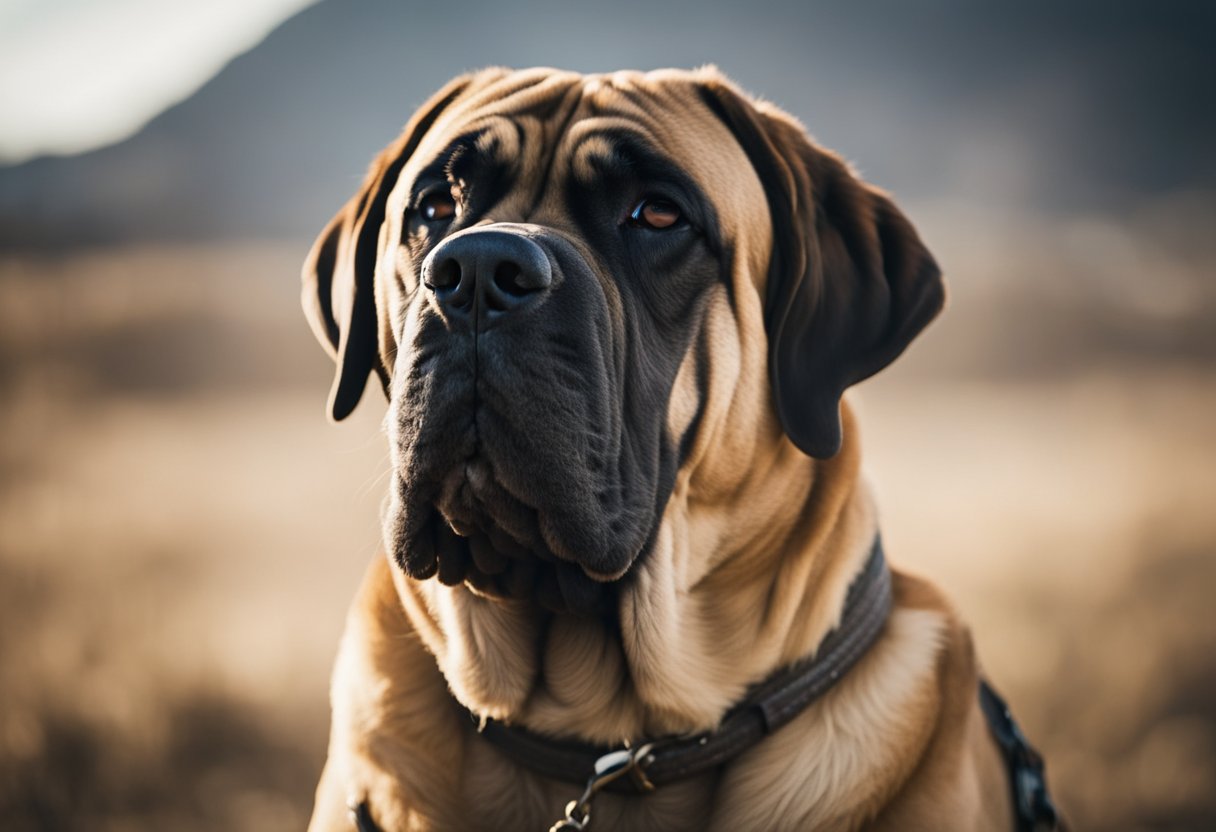
The Mastiff breed boasts a history rich in tradition and function, tracing back to ancient times and evolving through the ages in England. Recognized as one of the most venerable dog breeds, Mastiffs have served varied roles from war dogs to guardians.
Ancient Heritage
Mastiffs’ ancestral roots are believed to extend to ancient civilizations where they were often depicted in art and records. Sumerian terracotta from around 2000 BC indicates dogs resembling the Mastiff in stature. Additionally, European and Asian records dating back 3,000 years suggest the presence of Mastiff-type dogs, although direct genetic evidence linking modern Mastiffs to these ancient canines remains speculative.
Breed Evolution in England
The modern Old English Mastiff emerged in Britain, where it was refined further for its impressive size and guarding abilities. The Romans encountered Mastiffs in Britain, noting their formidable appearance and capability. These encounters led to the Mastiffs participation in battles and arena combat against fierce opponents such as bears and lions. Publications like the Cynographia Britannica later chronicled the breed’s characteristics and contributions to society as formidable guardian breeds. In domestic roles, Mastiffs continued their service as protectors of estates and loyal companions, solidifying their revered status in English history.
Physical Characteristics
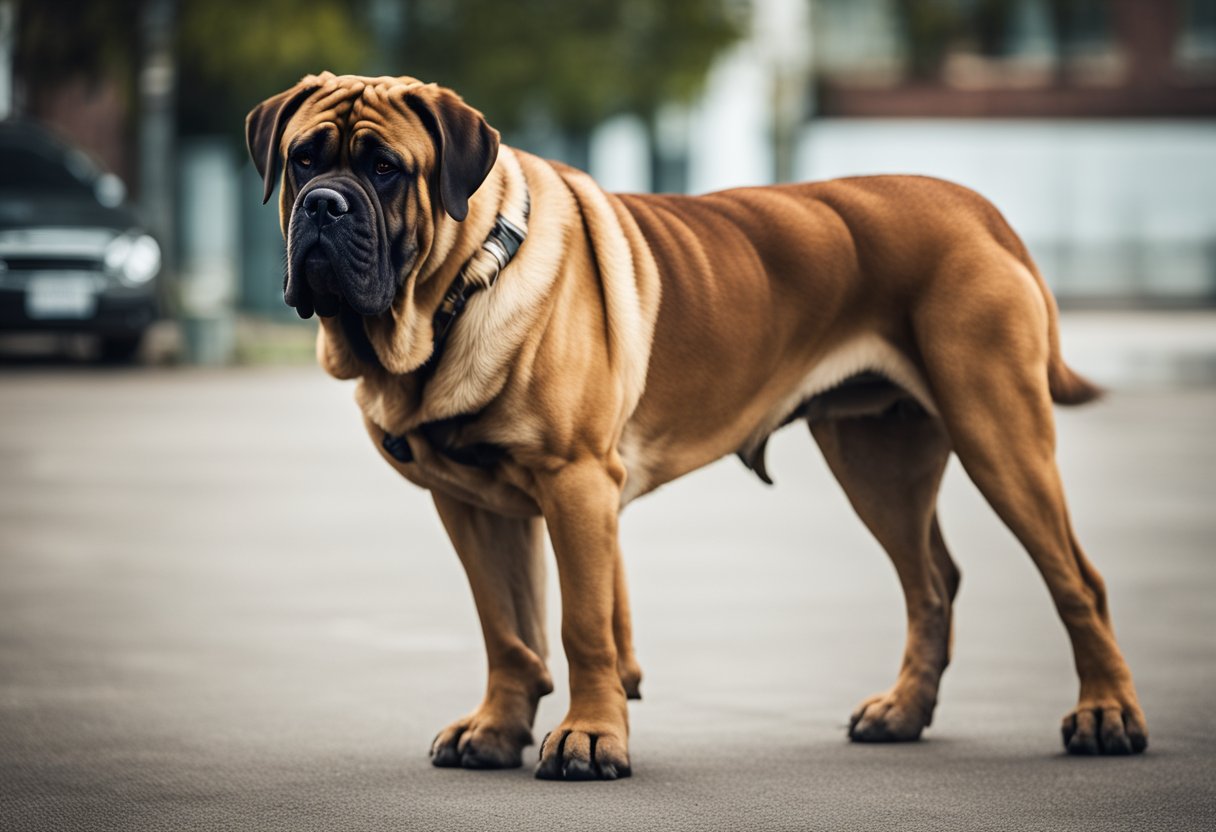
The Mastiff stands as a paragon of giant dog breeds, marked by its significant size and mass coupled with a distinct appearance.
Size and Weight
Mastiffs are one of the largest dog breeds. Adult males typically weigh between 160 to 230 pounds, while females are slightly smaller, weighing in at about 120 to 180 pounds. In terms of height, males can stand up to 30 inches at the shoulder, and females are usually a bit shorter.
Coat and Colors
The Mastiff’s coat is short, sleek, and relatively easy to maintain. This breed comes in a variety of colors including fawn, apricot, and brindle patterns. A signature feature of the Mastiff’s coat is the black mask on the muzzle, ears, and nose, giving them a striking and distinguishable look.
Distinctive Features
Mastiffs possess a powerful and muscular build, exuding strength and stability. The breed has large, droopy ears and a broad muzzle. Their eyes are set apart, adding to their dignified and commanding presence. Despite their massive size, they move with considerable grace and poise.
Temperament
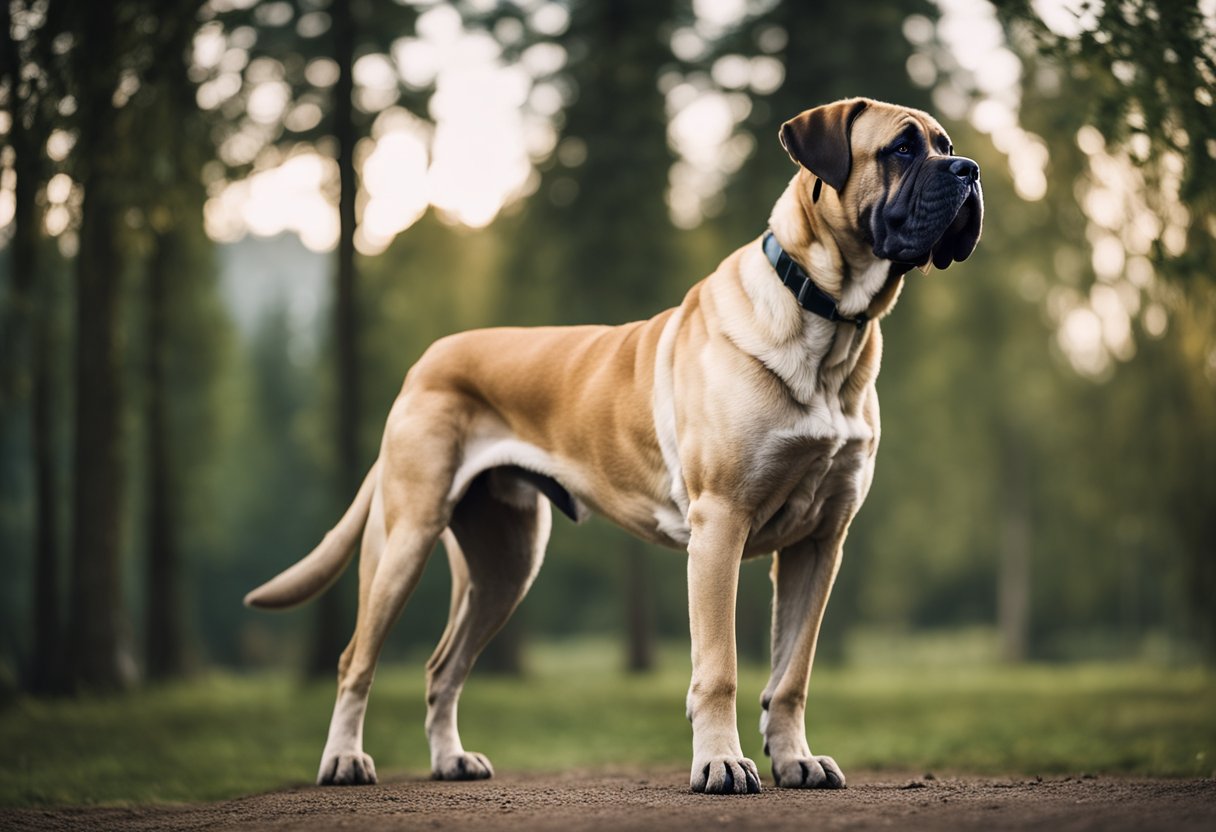
Mastiffs exhibit a personality that is both calm and dignified, embodying noble characteristics that make them loving and affectionate companions.
Behavioral Traits
Mastiffs are well-known for their kind and good-natured demeanor, often displaying a calm temperament that is suitable for home environments. Despite their large stature, they typically behave in a gentle manner and maintain a calm demeanor. A Mastiff’s protective instinct can be observed in the presence of their families, showing a natural inclination to safeguard those they are close to. They are generally good companions, especially suited for homes with older children due to their size and strength.
- Kind: Recognized for their affectionate nature.
- Calm: Typically display a peaceful temperament, rarely showing aggression when properly trained and socialized.
- Protective: Possess a strong instinct to protect loved ones, making them vigilant without being unnecessarily aggressive.
Compatibility with Families
Mastiffs develop deep bonds with their family members, proving to be loving and affectionate towards them. Their calm and dignified nature makes them suitable pets for families, although due to their size, caution should be exercised around smaller children. These dogs are often described as gentle giants and are known to be particularly kind to those within their household. They can be suspicious of strangers, which coupled with their protective nature, implies that adequate socialization is crucial to ensure they remain approachable and well-behaved around new individuals.
- Loving with Family: Deeply affectionate with family members, thriving on companionship.
- Cautious with Strangers: May show suspicion towards new faces, highlighting the importance of socialization.
Breed Varieties
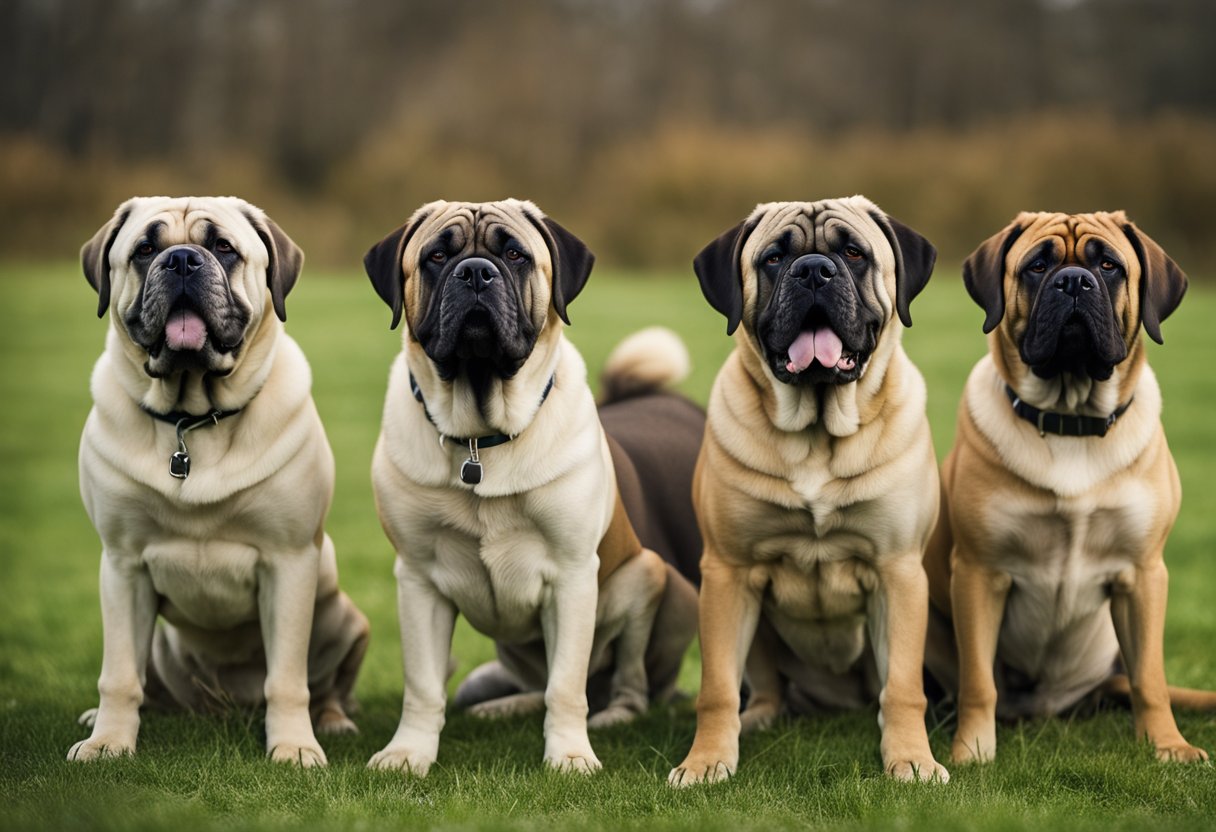
The Mastiff family consists of a range of breeds, each with its unique set of characteristics and origins. This section will explore the close relatives within the Mastiff group and the distinguishing features that set each breed apart.
Close Relatives
- English Mastiff: This breed is known for its impressive size and gentle nature. It is one of the largest dog breeds in terms of mass.
- Bullmastiff: A cross between the English Mastiff and the now extinct Old English Bulldog, it is slightly smaller and more agile with a protective instinct.
- Neapolitan Mastiff: Originating from Italy, this ancient breed is recognizable by its loose, wrinkled skin and massive frame.
- Tibetan Mastiff: These are large, strong-willed dogs with a long, thick coat suited to the cold Himalayan climate from which they hail.
- Dogue de Bordeaux: Also known as the French Mastiff, they are powerful dogs with a very muscular build, known for their loyalty.
Breed Distinctions
- Cane Corso: This Italian breed is a versatile working dog, known for being agile, and alert with a leaner physique compared to other Mastiffs.
- Fila Brasileiro: Also known as the Brazilian Mastiff, this breed is notable for its superb tracking ability and is often used as a guard dog.
- Boerboel: The South African Mastiff is strong and confident, originally bred to protect homesteads in harsh environments.
- Brazilian Mastiff: This is another term for the Fila Brasileiro, reflecting its origin and skill as a working dog in Brazil.
Each Mastiff breed carries a prominent lineage and set of traits tailored for different roles, from guardianship to companionship. They share a common ancestry that hails from various parts of the world, yet each breed stands out through individual size, build, and temperament.
Health and Care
Mastiffs require consistent care to maintain their health and well-being. Due to their size, this breed faces specific health challenges that owners should be aware of. Along with meeting exercise needs and grooming requirements, being vigilant about common health issues is essential for their care.

Exercise Requirements
Mastiffs need regular exercise to stay healthy but do not require as much as some other breeds due to their large size and typically lower energy levels. They do well with:
- Short to moderate walks twice a day.
- Play sessions in a secure area like a fenced yard.
Care must be taken not to over-exercise puppies, as their joints and bones are still developing.
Grooming Needs
The Mastiff’s short coat requires minimal but regular grooming to keep shedding under control.
- Brushing: Weekly brushing with a firm bristle brush is sufficient.
- Bathing: Occasional baths will keep them clean and smelling fresh.
Nail trimming, ear cleaning, and dental care should be part of their regular grooming routine to maintain overall health.
Common Health Issues
Mastiffs are prone to certain inherited health conditions, and knowing about these can help owners seek preventive care.
- Hip dysplasia: A common condition in large breeds that can cause joint pain and lameness.
- Bloat (Gastric Dilatation-Volvulus): A life-threatening condition where the stomach dilates and sometimes twists. Smaller, more frequent meals can help reduce this risk.
They have a lifespan ranging from 8 to 12 years, and with proactive care, Mastiffs can remain healthy and active throughout their lives.
Training and Socialization
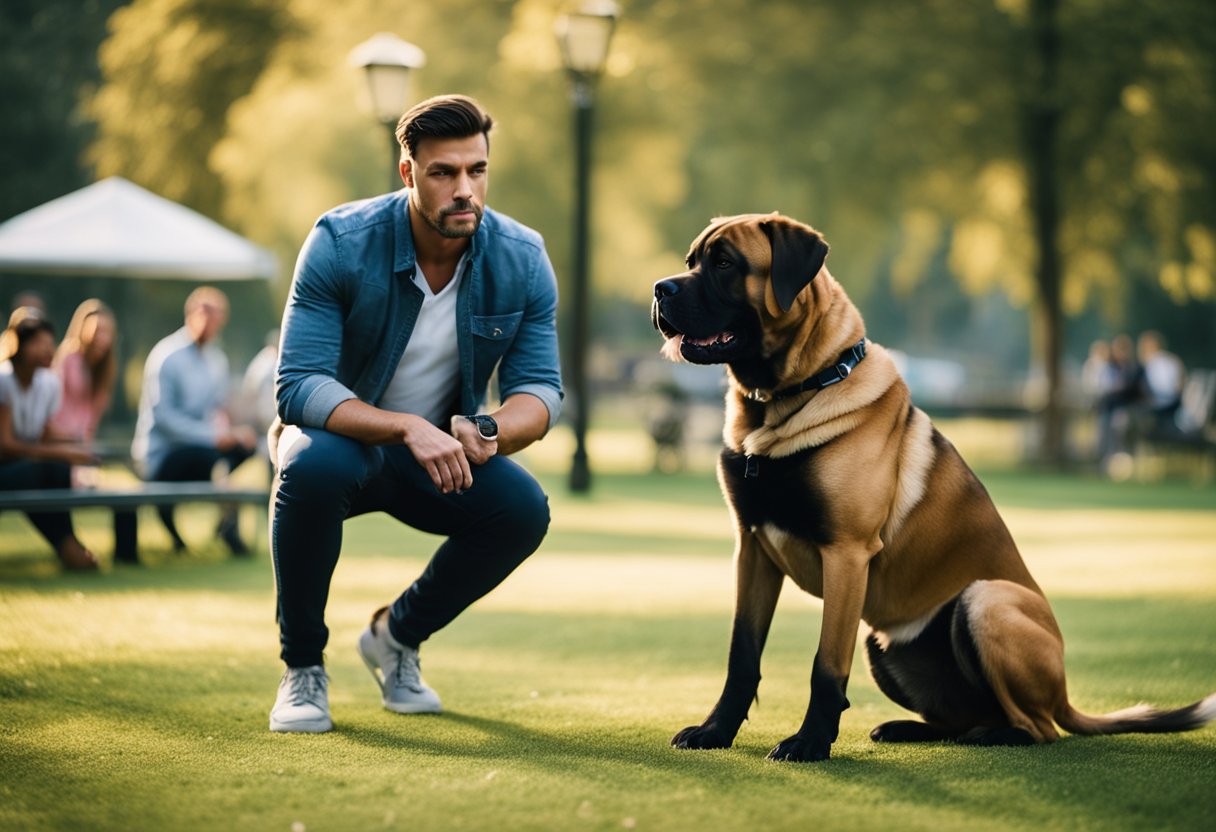
Training and socialization are crucial aspects of raising a well-behaved Mastiff. They ensure the dog is obedient and interacts appropriately with other animals and humans.
Obedience and Commands
Obedience training for a Mastiff should start early due to their large size and strength. It is imperative to teach basic commands like sit, stay, come, and heel. Training should be consistent, utilizing positive reinforcement such as praise and treats. A Mastiff’s training regimen should include:
- Daily practice sessions: Short, focused, and regular sessions help maintain attention and reinforce learning.
- Positive reinforcement: Rewards for compliance to encourage good behavior rather than punishment for disobedience.
Socialization with Other Animals
Socialization is necessary for Mastiffs to ensure they are well-adjusted and safe around different animals. This process should begin during puppyhood and extend into adulthood. Key points include:
- Introductions to other animals: Done gradually and in a controlled environment.
- Regular exposure: Consistent interaction with a variety of animals helps build a Mastiff’s confidence and demeanor.
Historically, Mastiffs have been used as war dogs due to their bravery and protective nature. Today, their training and socialization are geared toward making them reliable family members rather than combatants. The process is comprehensive, aiming to foster an obedient pet that thrives in a multi-species household.
Breed’s Role in History
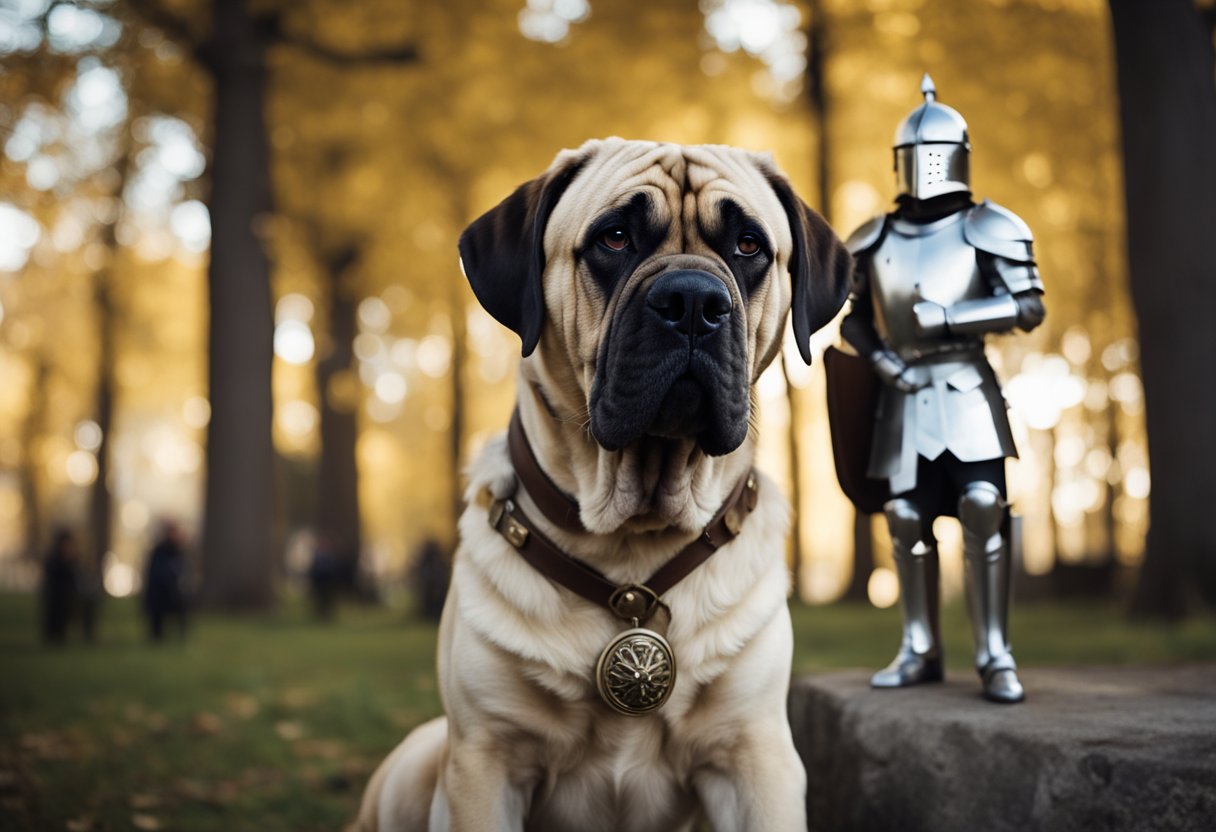
The Mastiff has served crucial roles throughout history, predominating in military efforts and leaving a substantial cultural footprint across civilizations. The breed’s remarkable size and strength have defined its utilization both on the battlefield and within communities.
Military and Warfare
The Mastiff is steeped in a background of military significance. In ancient times, they were pivotal in warfare, serving as protectors and war dogs. Their sheer size and courageous temperament made them formidable opponents against enemies. In England, their utility extended to guarding territories and assisting soldiers. They were not only trusted as guard dogs but also utilized in battles to instill fear in the hearts of adversaries.
- Roles:
- War dogs in ancient conflicts
- Guardians for soldiers and properties
- Participated in hunting expeditions, handling large predators like bears
- Employed as bodyguards for the nobility
Cultural Impact
Mastiffs have had an enduring impact on culture, symbolizing strength and loyalty. They were often associated with courage and likened to lions, a reflection of their powerful presence. The influence of the Mastiff is evident in its contributions to the development of other breeds, such as the Bulldog. The breed’s innate guardianship abilities made Mastiffs not only protectors of homes and estates but also guardians for sheep and other livestock, signifying their versatile role beyond aggression and warfare. Furthermore, their presence in search and rescue efforts showcases their broader utility and depth of character.
- Contributions:
- Stood as symbols of courtesy and courage
- Integral in the development of breeds like Bulldogs
- Acted as steadfast companions and guardians in peacetime endeavors
Reputation and Perception
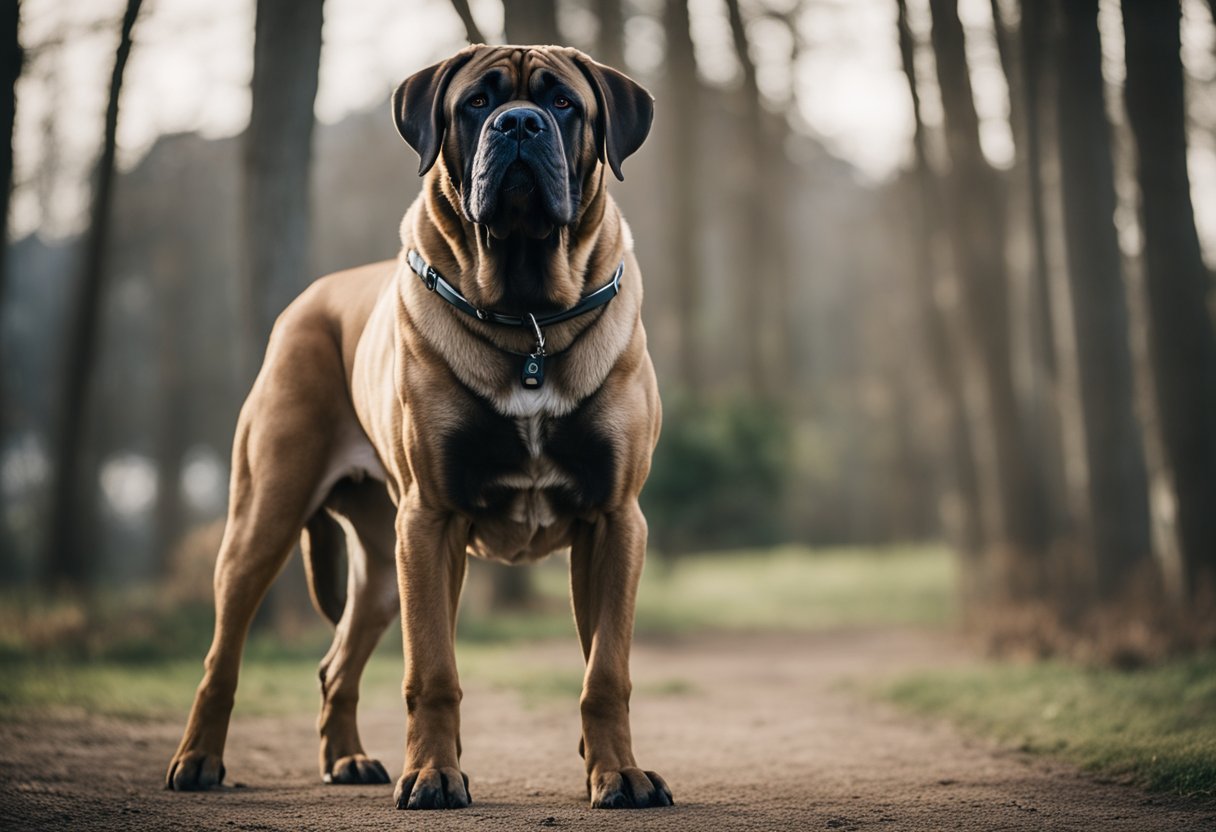
Mastiffs are often admired for their formidable size and protective instincts. This section examines the public image of Mastiffs and addresses potential misconceptions about the breed.
Public Image
The Mastiff breed is recognized by the American Kennel Club (AKC) as a member of the Working Group, reflecting its roles throughout history as a powerful guardian breed. This dog is known for having courage and a dignified demeanor. Mastiffs are perceived to be loyal protectors, which makes them excellent watchdogs for families.
- Roles: Guardian, Watchdog
- AKC Group: Working
- Attributes: Powerful, Courageous, Loyal
Potential Misconceptions
While Mastiffs are indeed powerful and have been used as fighting dogs in the distant past, they are typically gentle giants rather than aggressive by nature. Misconceptions may arise from their impressive stature and guardian heritage, leading some to mistakenly view them as inherently dangerous. In reality, with proper socialization and training, Mastiffs can be well-mannered and affectionate members of the family.
- Myth: Aggressive by nature
- Truth: Gentle and affectionate with proper training
- Role Evolution: From fighting dog to family companion
Clubs and Registries
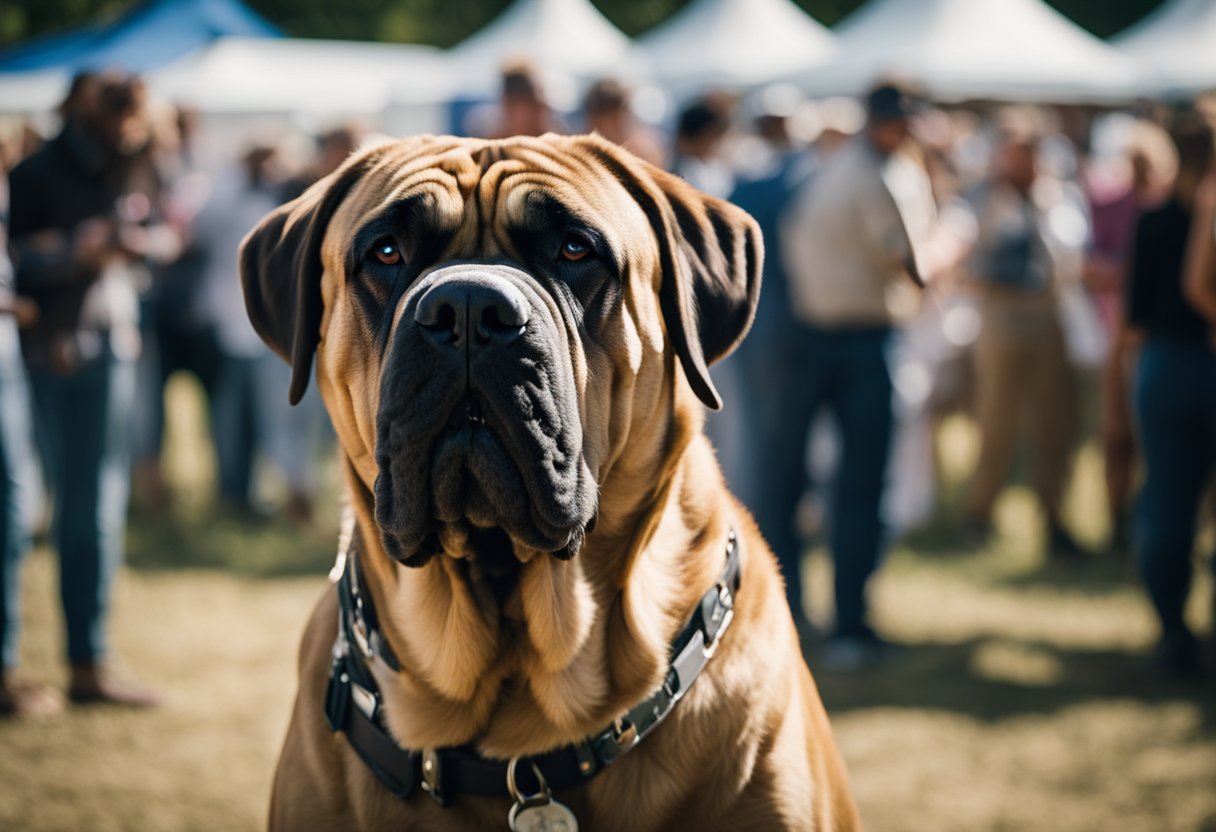
The prominent organizations for the Mastiff breed in the United States are the Mastiff Club of America (MCOA) and the American Kennel Club (AKC). These bodies provide breed standards, as well as support and resources for owners and breeders.
Breed Standards
The American Kennel Club sets the breed standard for Mastiffs, which outlines the ideal characteristics of the breed. The Mastiff Club of America is instrumental in this as well, having provided guidance for 94 years. The AKC registered 3,230 Mastiffs in 2022, indicating the breed’s popularity and the extent of the club’s oversight.
- Key Breed Standards:
- Size and Proportions: Mastiffs are a giant breed with a powerful build.
- Temperament: The breed is known for its gentle nature and good behavior with children.
Support and Resources
The Mastiff Club of America not only assists in maintaining breed standards but also provides various resources to Mastiff owners. It holds events such as specialty shows and National Specialties; the 75th National Specialty is scheduled for 2024. The MCOA also keeps an archive of past events and results, which can be a valuable resource for historical breed information.
- Support Provided by MCOA & AKC Includes:
- Events: Specialty shows and other gatherings for Mastiff enthusiasts.
- Education: Information regarding the care, training, and health of Mastiffs.
- Member Services: Registration services and support for breeders and owners.
Living with a Mastiff

The Mastiff breed impresses with its grand stature and gentle disposition, demanding specific consideration for successful cohabitation. They thrive in environments where their physical and emotional needs are met with consistent care.
Home Compatibility
Space: A Mastiff’s immense size necessitates a spacious home environment with ample room to move. They are not suited for small apartment living unless significant daily outdoor time is guaranteed.
- Yard: Preferably, homes should have a large fenced yard where a Mastiff can roam and relax securely.
- Older Children: Gentle with family, Mastiffs do well with respectful older children who understand how to interact with large dogs.
Socialization: Early and continued socialization is critical. Exposure to various people and situations helps maintain their natural calm and affectionate nature while ensuring their protective instincts remain appropriate and not overbearing.
Exercise and Activity Levels
Daily Routine:
- Walks: Regular walks are mandatory, not for high-intensity exercise but to keep the dog fit. Mastiffs are not suitable jogging partners due to their size.
- Mental Stimulation: They require mental engagement along with physical exercise to prevent boredom, which can lead to destructive behavior.
Health Considerations:
- Regular, moderate exercise helps to maintain a healthy weight and supports joint health, which is particularly important for a breed prone to obesity and orthopedic issues.
- Zealous Guardianship: While Mastiffs exhibit a protective temperament, they should be guided with training to channel their guardianship in a controlled manner.
A Mastiff is not merely a pet; they are zealous guardians, affectionate companions, and require a commitment to their specific needs. Proper home accommodation and consistent exercise routines are key to a harmonious life with this noble breed.
Notable Mastiffs
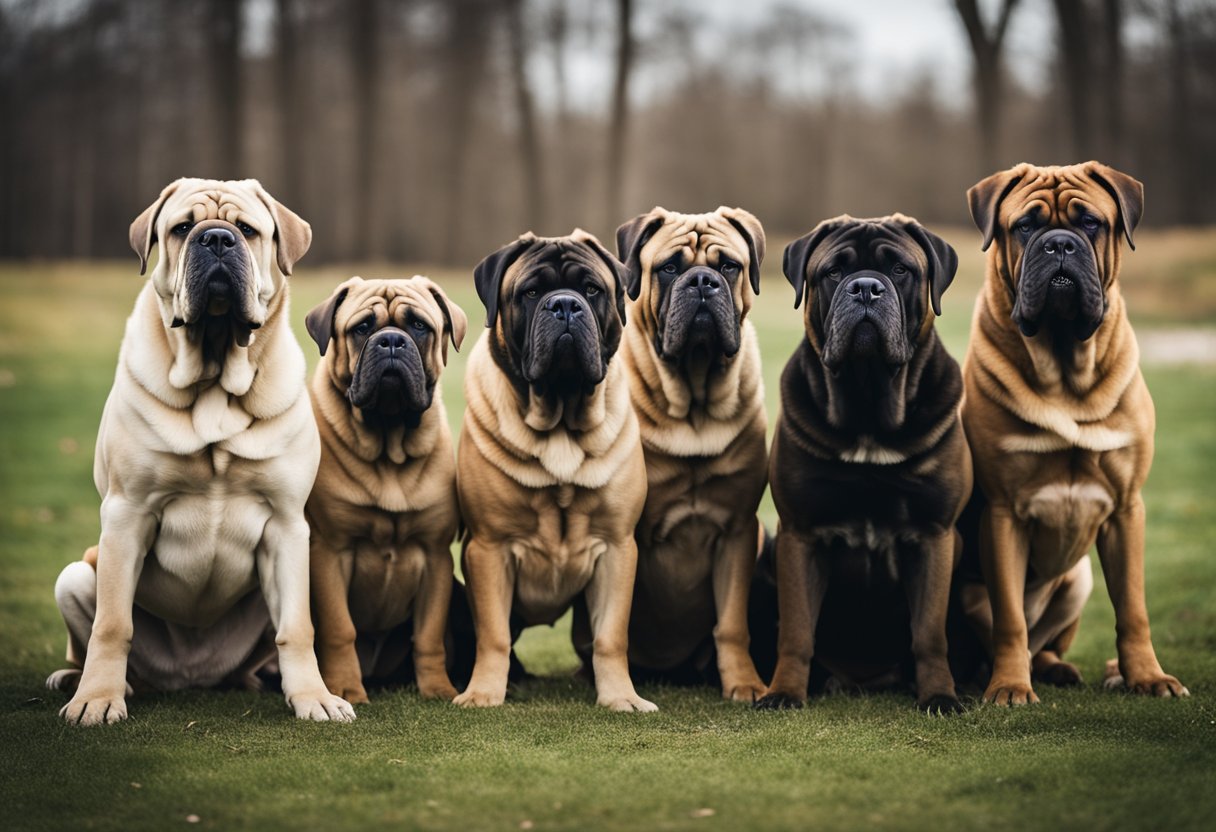
Mastiffs have a storied history that intertwines with human civilization, from the days of Roman guardianship to holding titles in the modern world of canines due to their unique characteristics.
Famous Dogs
Zorba, a Mastiff, is one of the most legendary canines who left a mark on the breed’s history. Listed in the Guinness Book of World Records, Zorba was known not merely for his size but also for exemplifying the breed’s gentle nature despite its massive form. Mastiffs also have a historical significance as they were employed by Romans for their zealous guardianship, and they have been a part of human society for thousands of years.
Record Breakers
The Mastiff breed is recognized for some remarkable individuals who have set world records. Mastiffs tend to be notable for their size and weight.
- Largest Mastiff: Zorba, an English Mastiff, once held the record for being the heaviest and longest dog ever recorded, weighing in at 343 pounds and measuring over 8 feet from nose to tail.
- Vocalization: Though Mastiffs barks infrequently, their deep and resonant bark is distinctive and can be surprisingly forceful coming from such a calm dog.
- Noteworthy Behaviors: Beyond their size, they are known for drooling and snoring loudly, behaviors that are particularly pronounced in Mastiffs compared to other breeds.
From puppyhood to their impressive size in adulthood, Mastiffs carry their own notable traits. Their snoring may be loud and their drooling a hallmark of the breed, but it is their historical legacy and record-breaking size that sets them apart in the canine world.
Frequently Asked Questions
In addressing commonly asked questions about Mastiffs, this section provides concise information about their various breeds, size, personality, and interaction with families and other pets.
What are the main differences between the various Mastiff breeds?
Mastiff breeds vary in size, temperament, and physical characteristics, with some, like the English Mastiff, known for their hefty build and calm demeanor, while others, such as the Neapolitan Mastiff, have more distinctive wrinkles and guardian instincts.
What is the typical size and weight range for Mastiffs?
The Mastiff is a giant breed, with males typically weighing between 160 and 230 pounds and standing up to 30 inches at the shoulder. Females are slightly smaller but also boast a substantial build.
What personality characteristics can be expected from an English Mastiff?
The English Mastiff often displays a gentle and affectionate nature, coupled with a loyal and protective instinct. Despite their size, they are known for being well-suited to families due to their calm and patient temperament.
How do Mastiffs typically behave around children and families?
Mastiffs are generally good-natured and patient with children, making them excellent family dogs. They tend to be gentle and protective of their family members, though their large size necessitates supervision around small children.
Can a Mastiff coexist peacefully with other dogs?
Whether a Mastiff can coexist with other dogs largely depends on the dog’s individual socialization and temperament. Early socialization is key, and Mastiffs can live harmoniously with other pets if properly introduced and trained.
How does the Tibetan Mastiff differ from other Mastiff breeds?
The Tibetan Mastiff stands apart with its thick fur, impressive mane, and watchful nature. Originally bred as a guardian for livestock and property, they possess a strong territorial instinct and are more independent and aloof compared to other Mastiff breeds.