
Introducing a new puppy to an older dog requires careful planning and understanding of canine behaviors to ensure a smooth transition. It is crucial to consider the unique personalities and temperaments of both animals when planning their introduction. The older dog’s routine and territorial feelings should be respected, while the puppy’s need for socialization and guidance shouldn’t be overlooked. By preparing your home and setting clear boundaries, you provide a secure environment where both canines can coexist.
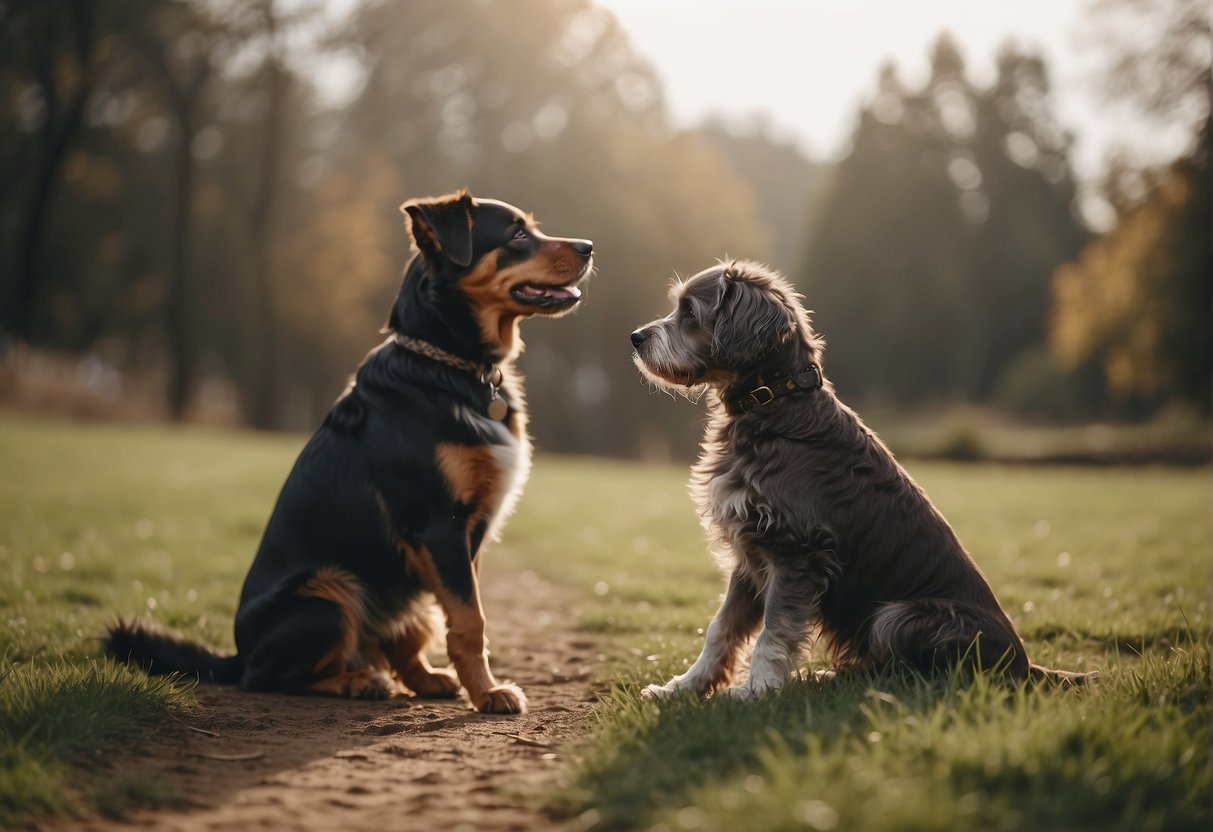
Health checks and a clean environment are fundamental prerequisites before merging a new puppy into your older dog’s space. Ensuring both dogs are healthy and up to date on vaccinations prevents the spread of disease and promotes a safe initial meeting. The introduction should be a tiered process involving neutral territory and controlled interactions. Proper supervision and gradual exposure can foster a positive relationship between the two, minimizing stress and the potential for conflict.
Key Takeaways
- Preparations and understanding of dog behavior are essential for smooth introductions.
- Health and safety checks are crucial prior to the first meeting.
- Managed interactions in neutral spaces promote positive canine relationships.
Preparing Your Home
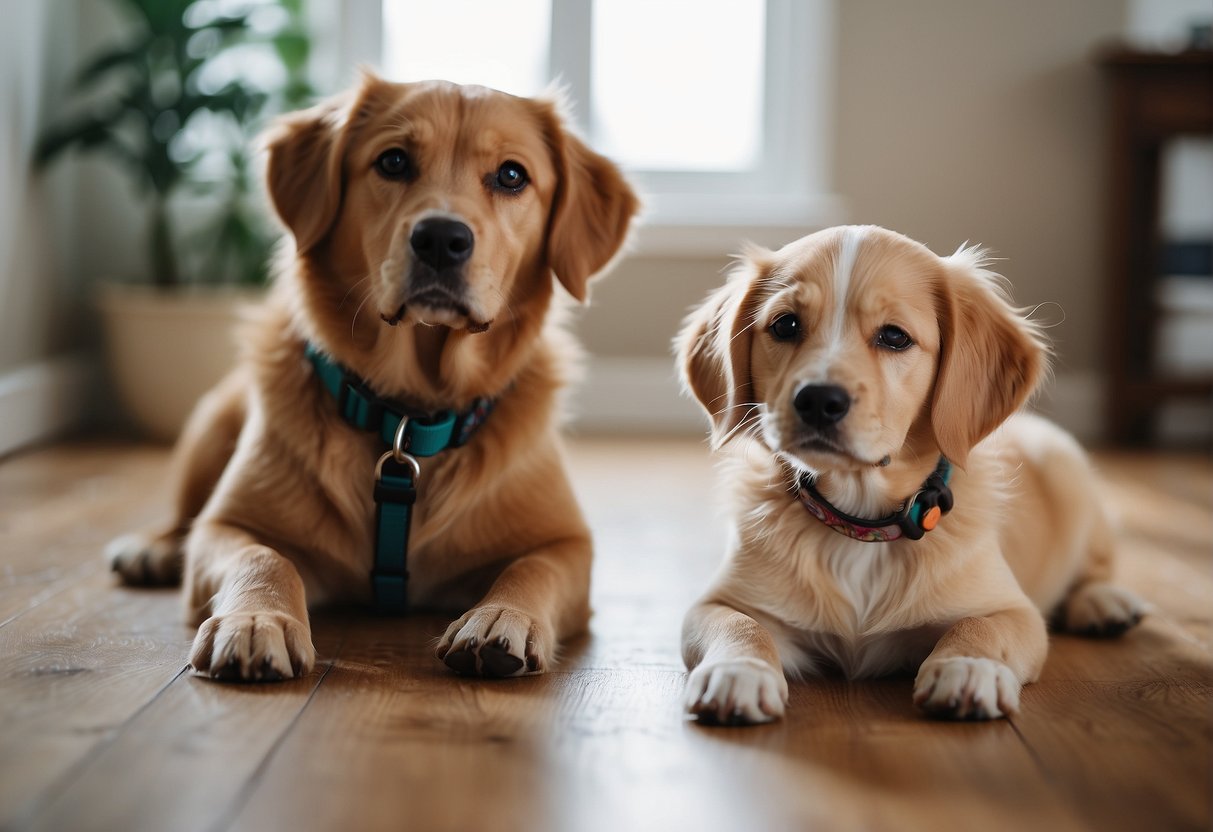
When introducing a new puppy to a home with an older dog, one must ensure the environment is set up for both comfort and safety. This involves creating separate, secure areas that cater to the needs of each dog, and implementing necessary safety measures to prevent any potential incidents.
Creating Separate Spaces
Secure Sleeping Quarters: It’s essential to provide separate sleeping spaces such as a crate for the puppy and a comfortable bed for the older dog in different areas of the home. If space permits, these should be in separate rooms to give each dog privacy.
Designated Play Areas: Utilize an exercise pen to establish a designated space for the puppy to play safely. This area can be set up in a corner of a room or in a specific part of your home where the puppy can have toys and move freely without disturbing the older dog.
Safety Measures
Install Baby Gates: To maintain controlled interactions between the new puppy and the resident dog, install baby gates at key entry points. This allows both dogs to see and smell each other without the risk of unwelcome physical contact.
Create Boundaries: Establish understood boundaries within the home using physical barriers. Ensure that each dog has its own separate areas for eating, sleeping, and playing to reduce tension and reinforce a sense of individual territory.
Understanding Dog Behavior

Introducing a puppy to an older dog requires a keen understanding of canine behavior to ensure a smooth transition. It’s essential to recognize stress signals in dogs and create opportunities for positive interaction.
Recognizing Stress Signals
Dogs communicate discomfort and stress through distinctive body language cues. Raised fur along the back, growling, snarling, and prolonged stares can indicate a dog feels threatened or anxious. Other signs to watch for include a hunched back or a display of teeth, signaling a need for space and caution in interactions.
| Stress Signal | Meaning |
|---|---|
| Growling | Warning or dissatisfaction |
| Snarling | Aggression; may precede a bite |
| Raised fur | Agitation or fear |
| Prolonged stares | Challenge or threat |
| Hunched back | Fear or submission |
| Display of teeth | Aggressive warning |
Encouraging Positive Interaction
Positive interaction should be gradually introduced. When dogs are relaxed and showing signs of friendliness, such as a play bow—where a dog lowers its front legs while keeping its rear end up—it can signal a willingness to interact playfully. Encouraging these moments can help foster a positive relationship between an older dog and a new puppy.
To enhance positive exchanges, consider:
- Parallel walking: Side-by-side walks without direct interaction, allowing dogs to become accustomed to each other’s presence.
- Controlled playtime: Supervised play, ensuring it remains friendly and stops before any sign of stress.
- Separate but together: Sharing the same space while engaged in separate activities, like chewing toys or resting.
Through understanding and responding to dog behavior and body language, owners can facilitate a more harmonious introduction between puppies and older dogs.
Health and Safety Priorities

Before introducing a new puppy to a senior dog, it’s crucial to prioritize health and safety to prevent disease transmission and reduce stress for both animals.
Ensuring Proper Vaccinations
Puppies should receive a full set of vaccinations before coming into contact with senior dogs. This typically includes:
- Distemper
- Parvovirus
- Adenovirus
- Rabies
Owners should also verify that the senior dog’s vaccinations are up-to-date to protect against potential illnesses.
Preventing Resource Guarding
To avoid possessive aggression, especially around food, implement the following:
- Separate food dishes: Provide each dog with their own dish and feeding area.
- Structured feeding times: Feed at specific times to establish a routine and reduce competition for food.
- Supervised interactions: Watch the dogs during initial meetings to intervene if signs of resource guarding appear.
Setting the Stage for The First Meeting
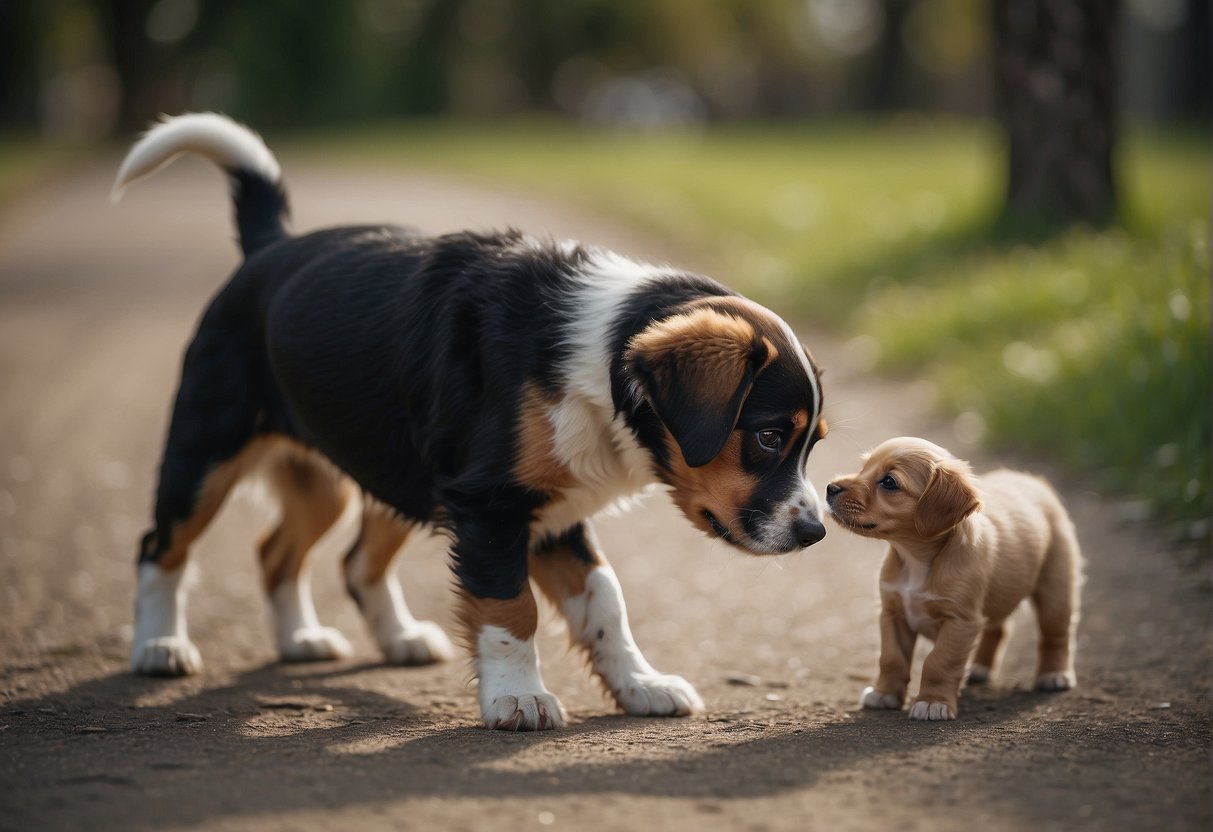
When introducing a puppy to an older dog, the initial meeting is critical to forming a positive relationship. Proper preparation and control of the environment can set the tone for a smooth and friendly interaction.
Choosing a Neutral Area
To minimize tension and prevent territorial behavior, the first introduction should occur in a neutral area unfamiliar to both dogs. Neutral areas can greatly reduce the likelihood of perceived threats and aggression. They may include:
- A neighbor’s yard
- Local park
- Training center
These areas should be quiet and free from distractions to ensure both dogs can focus on each other.
Controlling the Introduction
The introduction should be managed carefully to avoid overwhelming either dog. The older dog should be on a lead to help guide the interaction while allowing both parties the chance to sniff and meet at a comfortable distance. Steps to control the introduction:
- Initial Observation: Allow the dogs to view each other from a distance.
- Controlled Approach: Gradually decrease the distance between the two dogs.
- Guided Sniffing: Let the dogs sniff each other while maintaining a gentle lead.
- Supervised Interaction: Observe their body language closely for signs of discomfort or aggression.
A proper introduction is key, and patience during this initial phase can help ensure a friendly and respectful dog dynamic.
Initial Introduction Strategies
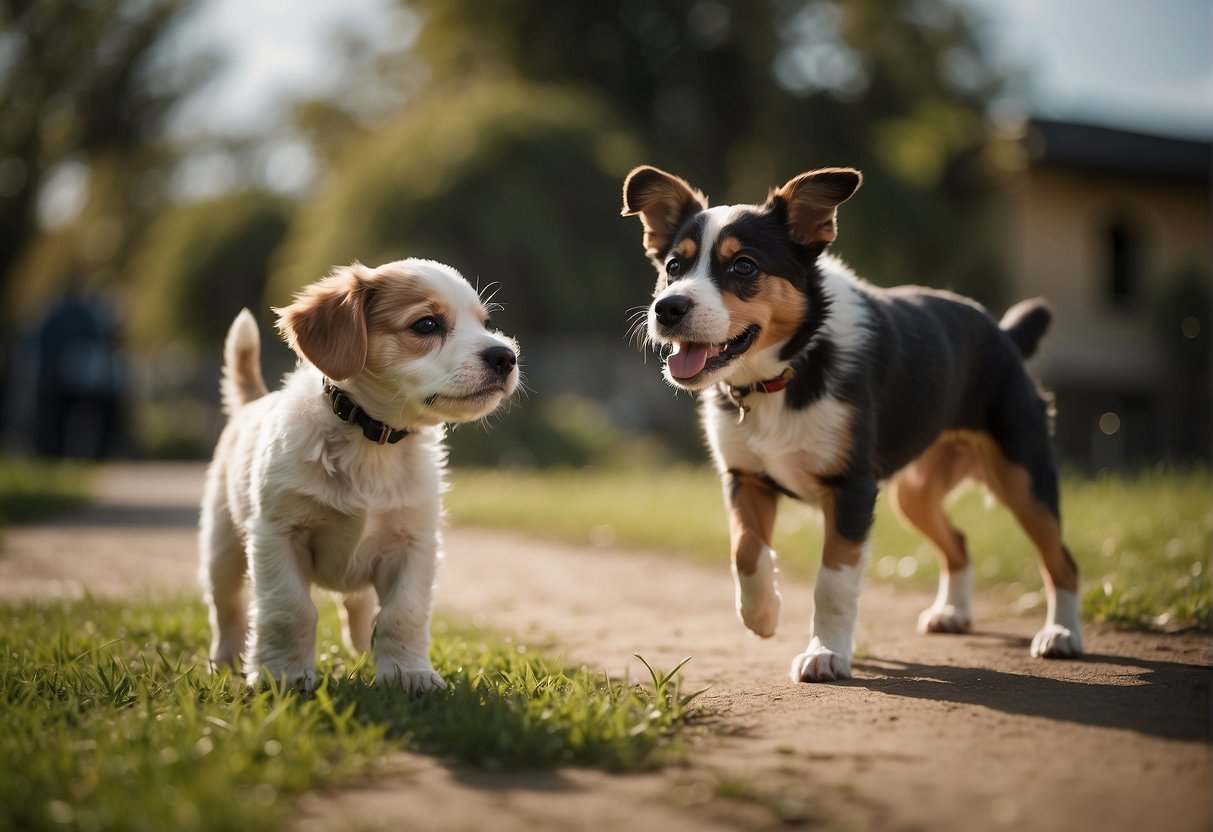
When introducing a puppy to an older dog, the initial meeting is crucial. It sets the tone for their future relationship. Careful supervision and an understanding of their initial interactions provide the best chance for a positive outcome.
Supervised Interactions
Supervision is essential during the first meeting between a puppy and an older dog. They should meet in a neutral, enclosed space to minimize territory-driven behavior. A responsible adult should always be present to monitor their interactions, ready to intervene if necessary. The goal is to ensure a controlled environment where both dogs can be safely observed. Here are some steps to follow:
- Neutral Territory: Choose a neutral location, like a fenced area, where neither dog feels territorial.
- Leashed Introduction: Keep both dogs on leashes held by two different people.
- Calm and Brief: Start with short, calm interactions and increase time gradually if they are responding well.
Interpreting First Greetings
The first greeting can tell a lot about how future interactions may go. It’s important to watch their body language. Positive signs include:
- Relaxed postures: Loose bodies and wagging tails at a medium height indicate curiosity and comfort.
- Sniffing: This is a common canine greeting behavior; allow the dogs to sniff each other while keeping the leashes loose.
On the other hand, watch out for signs of stress or aggression, such as:
- Growling: A low growl is a clear sign of discomfort.
- Stiffening: A dog that stiffens up is feeling tense and may be ready to escalate to aggressive behavior.
If any negative behaviors arise, calmly separate the dogs and try again later. It’s essential to allow them to set the pace of their meeting and interactions.
Fostering Positive Relationship
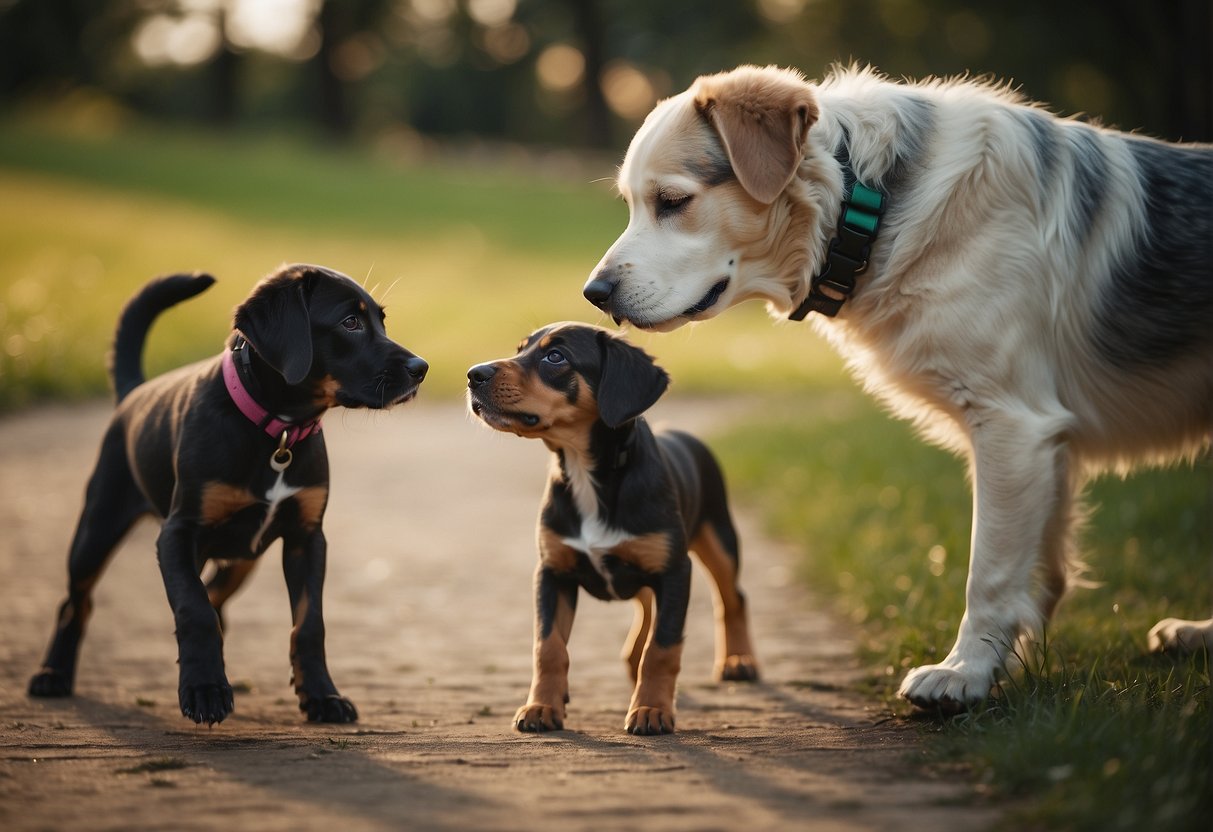
Introducing a puppy to an older dog requires careful management of interactions and respecting the established routines to foster a positive relationship. Structured playtime and maintaining the existing routine are critical for a successful integration.
Implementing Structured Playtime
Structured playtime encourages safe and positive interactions between the older dog and the new puppy. It should be:
- Supervised: Always monitor their interactions to ensure play remains gentle and to intervene if necessary.
- Short sessions: Begin with brief sessions and gradually increase the duration as the dogs become more comfortable with each other.
- Turn-based: Allow each dog individual playtime with toys to prevent resource guarding.
During play, one should look for signs of stress or aggression and separate the dogs if these behaviors arise. Positive reinforcement, such as treats and praise for good behavior, can be instrumental in these sessions.
Managing the Existing Routine
The older dog’s routine provides them a sense of security and changing it abruptly can lead to stress. Here’s how one can maintain it:
- Feeding: Keep feeding times consistent, with separate spaces for each dog to enjoy their meal without pressure.
- Attention: Ensure the older dog receives the same amount of attention and quality time they are accustomed to, to prevent jealousy.
- Walks: Continue regular walking schedules, incorporating the new puppy into the routine slowly and on neutral ground when possible.
Respecting the older dog’s routine while integrating the puppy shows both animals they are valued and helps in establishing a harmonious living environment.
Training for Co-habitation
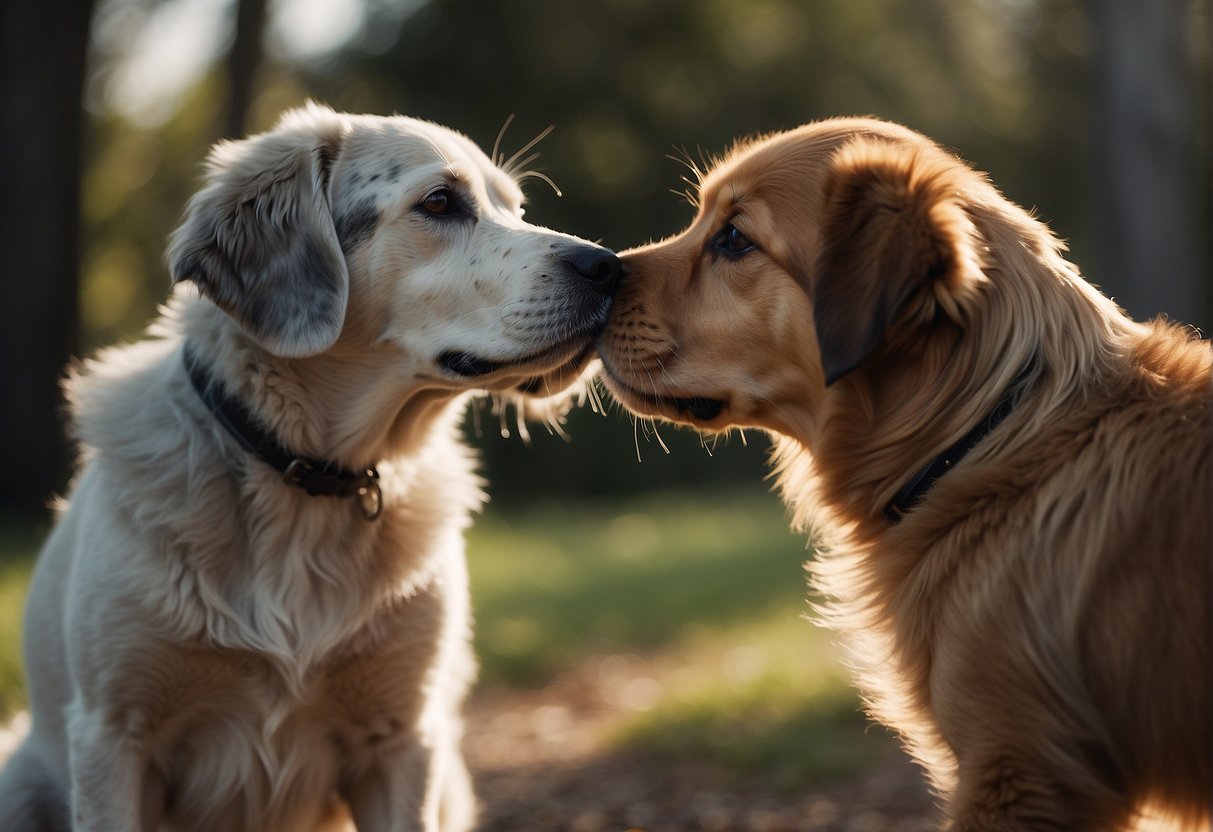
Proper training is essential when introducing a new puppy to an older dog. This ensures that both parties can coexist peacefully. A structured approach, focusing on teaching basic commands and using reward-based reinforcement, aids in making the transition smoother and fostering a positive relationship between the dogs.
Teaching Basic Commands
Training should start with teaching both the new puppy and the resident adult dog basic commands. These fundamental commands include sit, stay, come, and down. Consistency is key, as dogs thrive on predictability. An established routine helps both canines understand expectations and boundaries within their shared environment.
- Commands to Teach:
- Sit: Instructs the dog to sit down and stay in one place.
- Stay: Helps the dog learn to remain in a location until released.
- Come: Used to call the dog to the owner’s side.
- Down: Directs the dog to lie down.
Reward-Based Reinforcement
Reward-based reinforcement is a proven method to promote good behavior. This technique involves giving a treat, praise, or playtime whenever either the new puppy or the resident dog follows a command or exhibits desirable behavior. It creates a positive association with obeying commands and encourages repeat behavior.
- Methods of Rewarding:
- Treats: Small snacks given immediately after the desired action.
- Praise: Verbal affirmation in a happy tone for compliance.
- Playtime: A short period of play as a reward, reinforcing a positive experience.
In structuring interactions, always supervise and intervene if any signs of discomfort or aggression appear. Patience is crucial, as the older dog may require time to adjust to the energetic puppy, and the new puppy may need time to learn from repeated interactions.
When To Seek Professional Help

Introducing a new puppy to an older dog can sometimes result in behavioral challenges that require professional intervention. If an owner observes persistent issues that they are not equipped to handle, it may be time to consult a professional.
Hiring a Canine Behaviorist
A canine behaviorist specializes in understanding and modifying dog behavior. They are often consulted when:
- An older dog exhibits signs of stress or aggression towards the puppy that do not resolve over time.
- The puppy is not responding to the older dog’s signals or is overly persistent, causing constant disruption.
- There is no improvement in the relationship between the two dogs despite the owner’s consistent training efforts.
When any of these conditions persist, seeking a canine behaviorist’s expertise can help address the underlying emotional and behavioral issues, promoting a safer and more harmonious environment. A behaviorist can devise a tailored plan that may include:
- Assessment: Evaluating both dogs to understand the roots of the behavioral issues.
- Behavior Modification: Implementing strategies to alter negative behaviors.
- Training: Teaching both dogs appropriate ways to interact.
- Emotional Support: Providing techniques to help the older dog cope with the change.
Owners should note that choosing a qualified professional with credentials in animal behavior is crucial. With the right guidance, most issues can be effectively managed, allowing for a peaceful coexistence between the puppy and the older dog.
Maintaining a Peaceful Home
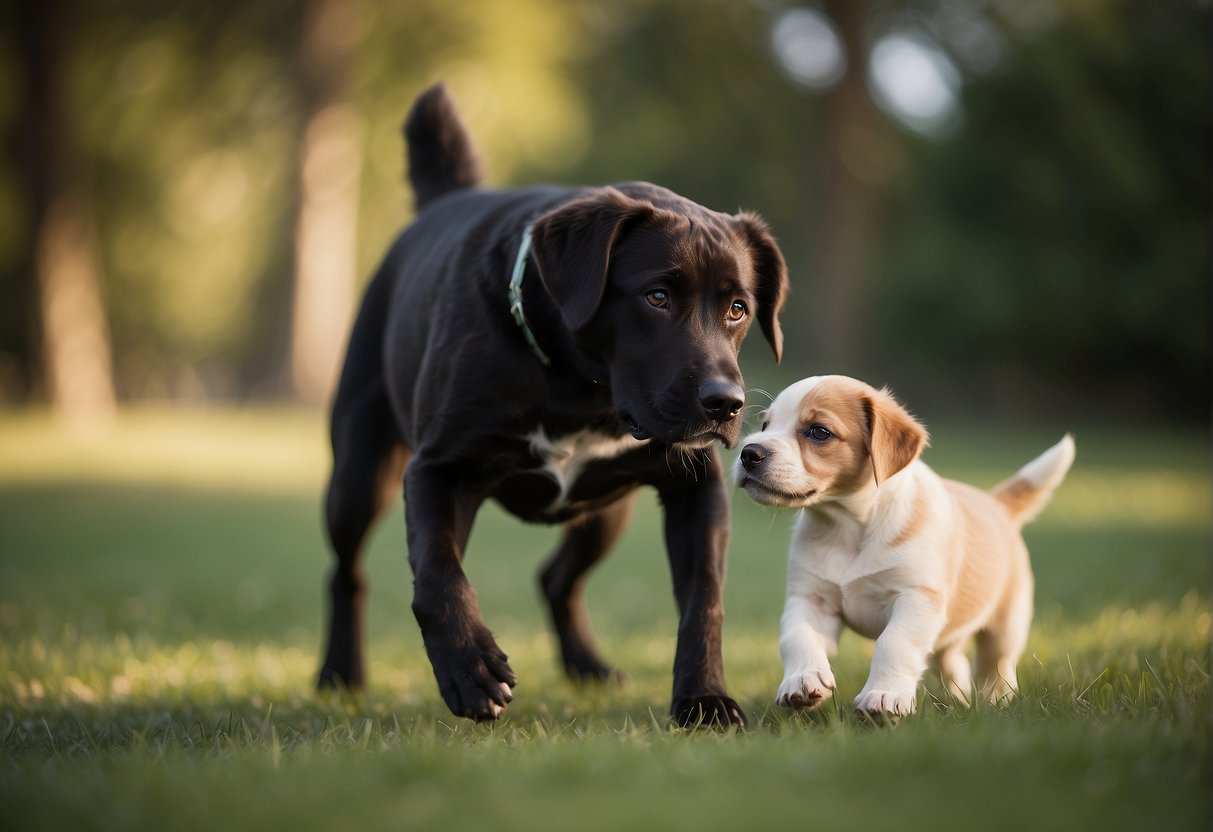
Introducing a new puppy into a home with an older dog requires careful management to maintain a peaceful atmosphere. Pet parents can aid this transition by establishing routines and proper training to cater to the emotional and territorial dynamics of their pets.
Adjusting to The New Dynamics
When a new puppy enters a senior dog’s territory, it’s vital to respect the established pet’s routine to mitigate stress. Routine plays a crucial role in how an older dog perceives its environment and the introduction of a new family member. Pet parents should:
- Maintain the older dog’s feeding, walking, and playtime schedule.
- Gradually introduce the new puppy to the older dog’s routine, allowing both animals to adjust to each other’s presence comfortably.
Creating designated spaces can help, such as separate beds or crates, giving each dog its own safe area. During initial interactions, a controlled and neutral setting is imperative to prevent territorial behavior. This could involve:
- Short, supervised sessions where both dogs can interact without the potential for escalated confrontations.
- Using barriers such as baby gates to allow dogs to see and smell each other before direct contact.
Ensuring Long-Term Success
Long-term harmony within the home relies on training and positive reinforcement techniques. Pet parents should take the following steps:
- Establish clear rules and boundaries for both dogs to follow.
- Utilize obedience training to reinforce these rules, ensuring that each dog understands expected behaviors.
Reinforcing positive interactions between the older dog and the puppy is vital. This can include:
- Giving treats when they behave calmly around each other.
- Offering praise or affection for peaceful co-existence.
As the dogs get accustomed to one another, pet parents can gradually merge their routines, further facilitating a unified household dynamic. They should also:
- Spend quality one-on-one time with each dog to strengthen individual bonds and prevent jealousy.
- Monitor the dogs’ body language and interactions, intervening if tensions arise.
Training sessions should be regular but not overwhelming, keeping each dog’s comfort level in mind. Consistency in training and routine will go a long way in ensuring a tranquil home environment for all.
Special Considerations for Adopting
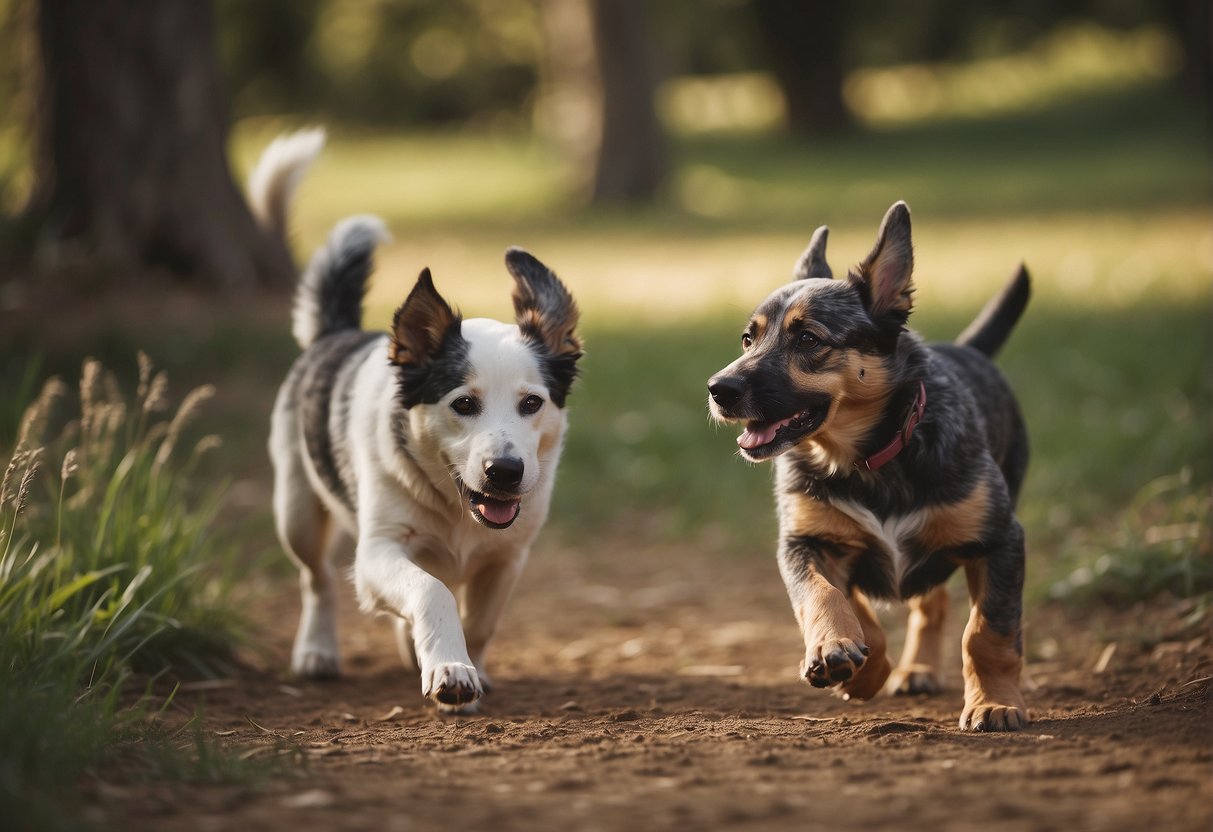
When adopting a new puppy into a household with an older dog, the acclimation process is crucial for the well-being of both dogs. Careful consideration of the existing pet’s needs, combined with knowledge in animal sciences, is pivotal for a smooth transition.
Addressing the Needs of a Strange Dog
Before bringing the puppy home, it is important to ensure that the needs of the older dog, who may find the new puppy to be a strange addition to their territory, are fully considered. One must:
- Understand Behavioral Compatibility: Assess the older dog’s history of social interactions. If they have been an only dog or display signs of being less sociable, the introduction needs extra care.
- Health Assessments: Ensure the older dog is in good health. Existing health issues can cause stress, which might be exacerbated by introducing a new, energetic puppy.
- Create a Safe Environment: Both the older dog and the new puppy should have their own safe spaces. Use baby gates or similar barriers to give each dog their own area.
- Prepare for Patience and Supervision: The first interactions should be closely supervised. It can take time for dogs to adjust to one another, and patience from the owner is essential.
By attending closely to these factors, the process of introducing a new puppy to an older dog has the greatest chance of success.
Outdoor Activities Together
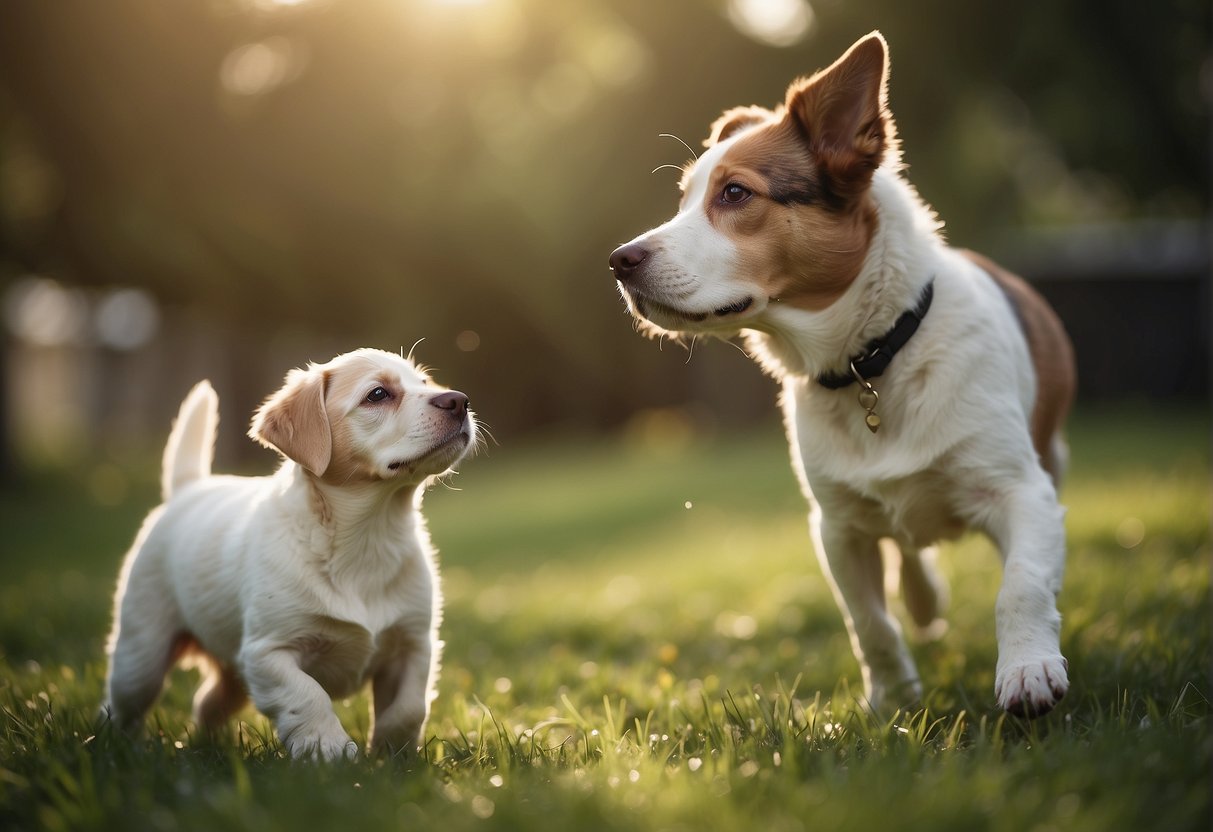
Outdoor bonding activities such as joint walks are essential for introducing puppies to older dogs. They allow both dogs to interact in a neutral environment and establish a shared routine that promotes harmony.
Walking Both Dogs on Lead
Initial Walks: It’s advisable to start with both dogs on separate leads, handled by two people if possible. This arrangement prevents direct confrontation and gives each dog their own space. Walk parallel to one another, allowing a safe distance between the dogs to gradually sniff and acknowledge each other without the pressure of a face-to-face interaction.
- Leads: Use sturdy leads to maintain control over both the puppy and the older dog.
- Consistency: Regular walks help to build positive associations between the dogs.
- Observation: Pay attention to body language, rewarding calm and friendly behavior.
Transitioning to Off-Leash
Exercise Pen: Once the dogs display consistently friendly behavior on lead, they can be transitioned to an off-leash environment, such as a secured exercise pen. Here, they have the opportunity to interact more freely while still in a controlled environment.
- Supervision: Keep a vigilant watch for any signs of discomfort or aggression.
- Control: Be ready to step in and separate the dogs if necessary.
- Off-Leash Walks: When both dogs exhibit relaxed behavior toward one another, they can be introduced to off-leash walks in safe, enclosed areas.
By methodically managing their outdoor activities together, the puppy and the older dog can set the foundation for a friendly and respectful relationship.
Frequently Asked Questions
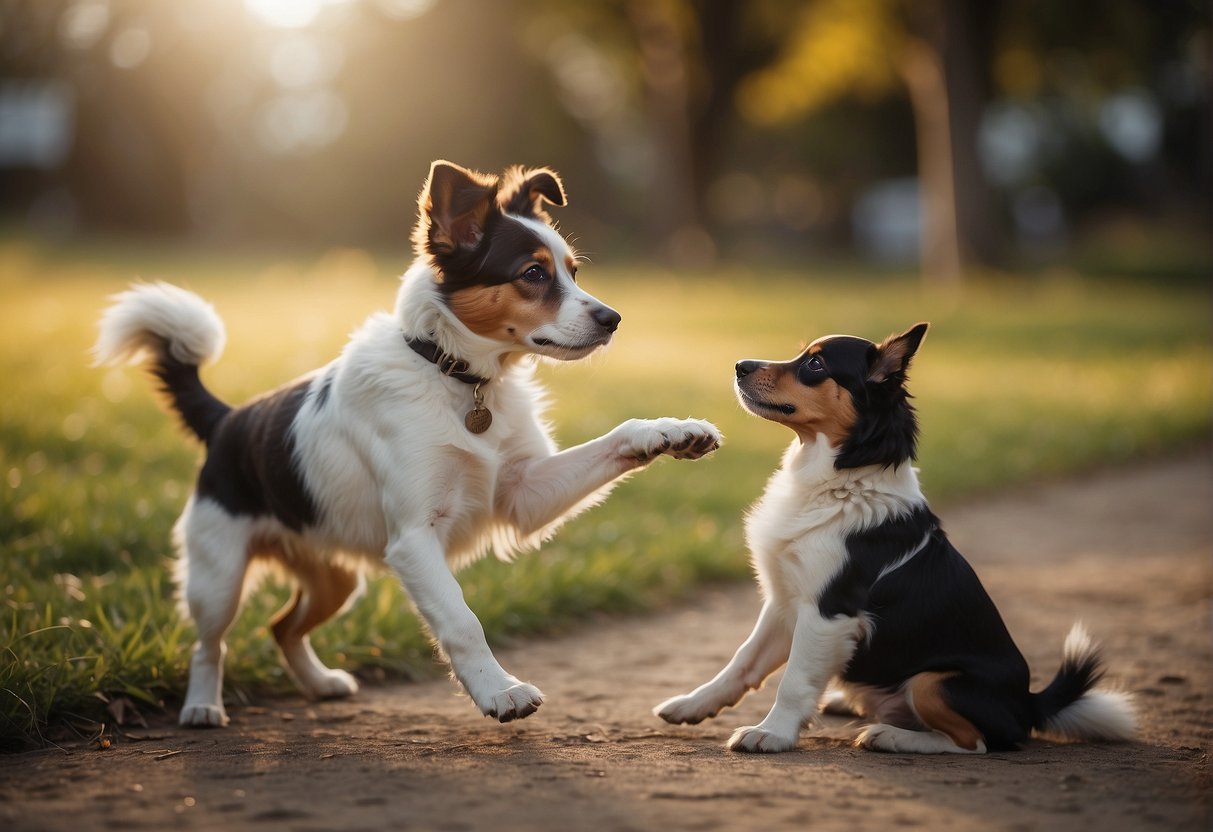
When introducing a new puppy to an older dog, it’s essential to approach the process with patience and have a strategy for a smooth integration that respects the needs and temperaments of both dogs.
What are the best practices for introducing a new puppy to a dominant older dog?
Safety is paramount when introducing a new puppy to a dominant older dog. They should meet in a neutral area where the older dog does not feel territorial. Initial interactions should be short and supervised, with both dogs on leashes to prevent aggressive behavior.
What methods does Cesar Millan recommend for integrating a puppy with an established dog?
Cesar Millan suggests exercise, discipline, and affection to integrate a puppy with an established dog. He emphasizes the importance of meeting on neutral ground, matching the puppy’s energy level with an equally calm older dog, and maintaining calm assertive leadership throughout the introduction.
What steps should be taken when introducing a puppy to an existing male dog in the household?
When introducing a puppy to an existing male dog, it’s important to first allow the older dog to sniff an article belonging to the puppy. The first meeting should be in a controlled setting, like a fenced yard, where the male dog can feel at ease. Supervision and positive reinforcement are vital to ensure peaceful interactions.
What are the advantages of raising a puppy alongside an older dog?
Raising a puppy alongside an older dog can offer numerous benefits, such as providing the puppy with a role model for learning appropriate behaviors. The older dog can help teach the puppy the rules of the house and often socializes the puppy more effectively than humans alone can.
How can you encourage an older dog to accept a new puppy into the home?
Encouraging an older dog to accept a new puppy involves providing ample attention to the existing pet to avoid jealousy. Creating positive associations with the presence of the puppy, like treats and praise during their interactions, helps in forming a bond. Ensuring the older dog has its own space can also facilitate acceptance.
What is the typical adjustment period for a dog to become comfortable with a new puppy?
The typical adjustment period for a dog to become comfortable with a new puppy varies with the individual dog’s temperament but often lasts several weeks. Observing the older dog’s body language and providing them with breaks from the puppy is crucial during this time to reduce stress and promote a positive relationship.