
Cushing’s disease, also known as hyperadrenocorticism, is a condition that predominantly affects middle-aged and senior dogs. It occurs when a dog’s adrenal glands produce too much cortisol, which can lead to a variety of health problems. Senior dogs, with their aging bodies, are especially vulnerable to this disease. Understanding Cushing’s disease in our older canine companions is essential for early detection and treatment, which can significantly enhance their quality of life.
The disease manifests through a range of symptoms that may be mistaken for normal signs of aging. Increased thirst, frequent urination, a pot-bellied appearance, and loss of hair are common indicators. As these symptoms gradually develop, the early stages of the disease can easily go unnoticed. Early diagnosis is critical, as Cushing’s disease can predispose dogs to other serious conditions such as diabetes and infections. Treatment options vary and can include medication and, in some cases, surgery, but managing Cushing’s disease requires lifelong care and can be more challenging in senior dogs due to their age and potential comorbidities.
Key Takeaways
- Cushing’s disease is a significant endocrine disorder affecting older dogs.
- Early detection and treatment of the disease can improve a senior dog’s life.
- Management of Cushing’s requires lifelong care and is crucial for older canines.
Understanding Cushing’s Disease

Cushing’s Disease, commonly termed hyperadrenocorticism, is characterized by the overproduction of cortisol by the dog’s adrenal glands. This hormonal imbalance leads to a multitude of symptoms affecting middle-aged and older dogs.
Hormonal Imbalance and Cortisol
Cortisol is a steroid hormone critical for a range of bodily functions, including stress response, immune system regulation, and metabolism. In healthy dogs, the pituitary gland releases adrenocorticotropic hormone (ACTH), which stimulates the adrenal glands to produce the right amount of cortisol. Cushing’s Disease arises when there’s an excess of cortisol, which can be due to an overactive adrenal gland or an excess of ACTH from the pituitary gland.
Pituitary-Dependent vs. Adrenal-Dependent Cushing’s
Pituitary-Dependent Cushing’s, accounting for approximately 85% of cases, occurs when a benign tumor in the pituitary gland overproduces ACTH, leading to overstimulation of the adrenal glands. In contrast, Adrenal-Dependent Cushing’s involves a tumor directly on one of the adrenal glands, causing cortisol overproduction regardless of ACTH levels. The diagnosis and treatment plan depend on accurately identifying the type of Cushing’s Disease present.
Signs and Symptoms
Recognizing the signs and symptoms of Cushing’s disease is essential for the well-being of senior dogs. This section details the physical and behavioral changes you may observe if your dog has this condition.
Physical Changes in Dogs
Senior dogs with Cushing’s disease often exhibit a range of physical symptoms due to the excessive production of cortisol. Common physical signs include:
- Pot-Bellied Appearance: A distinctive bulging of the abdomen, sometimes quite pronounced.
- Hair Loss (Alopecia): Thinning of the fur, predominantly on the body, while the head and legs typically remain unaffected.
- Increased Appetite: Dogs may show a heightened desire for food.
- Calcinosis Cutis: The development of hard, calcium-like deposits under the skin due to prolonged exposure to high cortisol levels.
- Weakness: As the disease progresses, dogs can exhibit a general sense of lethargy and muscle weakness.
- Panting: Increased panting even without exercise, which may be due to weakened respiratory muscles or efforts to dissipate heat.
- Increased Thirst and Urination: A noticeable increase in water consumption and the need to urinate more frequently.
Behavioral Alterations
Changes in behavior are also indicative of Cushing’s disease in dogs:
- Irritability or Anxiety: Dogs may seem more anxious or irritable than usual.
- Pacing: A dog may pace frequently, indicating restlessness or discomfort.
- Abnormal Sleep Patterns: Affected dogs may have changes in their sleep routines, including sleeping more during the day or being restless at night.
Diagnosis of Cushing’s Disease
An accurate diagnosis of Cushing’s Disease in dogs is achieved through a combination of veterinary assessments and specific diagnostic tests aimed at measuring cortisol levels and evaluating adrenal function.
Veterinary Assessment
The diagnostic process begins with a veterinarian conducting a comprehensive examination. They review the dog’s health history and perform a thorough physical exam. Particular attention is given to signs consistent with Cushing’s Disease, such as increased thirst, increased urination, and a pot-bellied appearance. Also fundamental to the assessment is a complete blood count (CBC) and a biochemistry profile, which can reveal changes in blood components often associated with Cushing’s Disease.
Diagnostic Tests
Diagnostic tests are crucial for confirming Cushing’s Disease.
- ACTH Stimulation Test:
- Measures how well the adrenal glands respond to adrenocorticotropic hormone (ACTH).
- Cortisol levels are tested before and after ACTH administration.
- Low-Dose Dexamethasone Suppression Test (LDDS):
- Involves administering dexamethasone and measuring cortisol production subsequently.
- A lack of cortisol suppression indicates Cushing’s Disease.
- High-Dose Dexamethasone Suppression Test:
- Similar to LDDS, but with a higher dose to distinguish between different types of Cushing’s Disease.
- Urinalysis:
- Evaluates the urine cortisol to creatinine ratio (UCCR).
- Determines if cortisol levels are elevated.
- Ultrasound:
- Used to assess the size and structure of the adrenal glands.
- Can help identify tumors or other abnormalities contributing to the disease.
Treatment Options
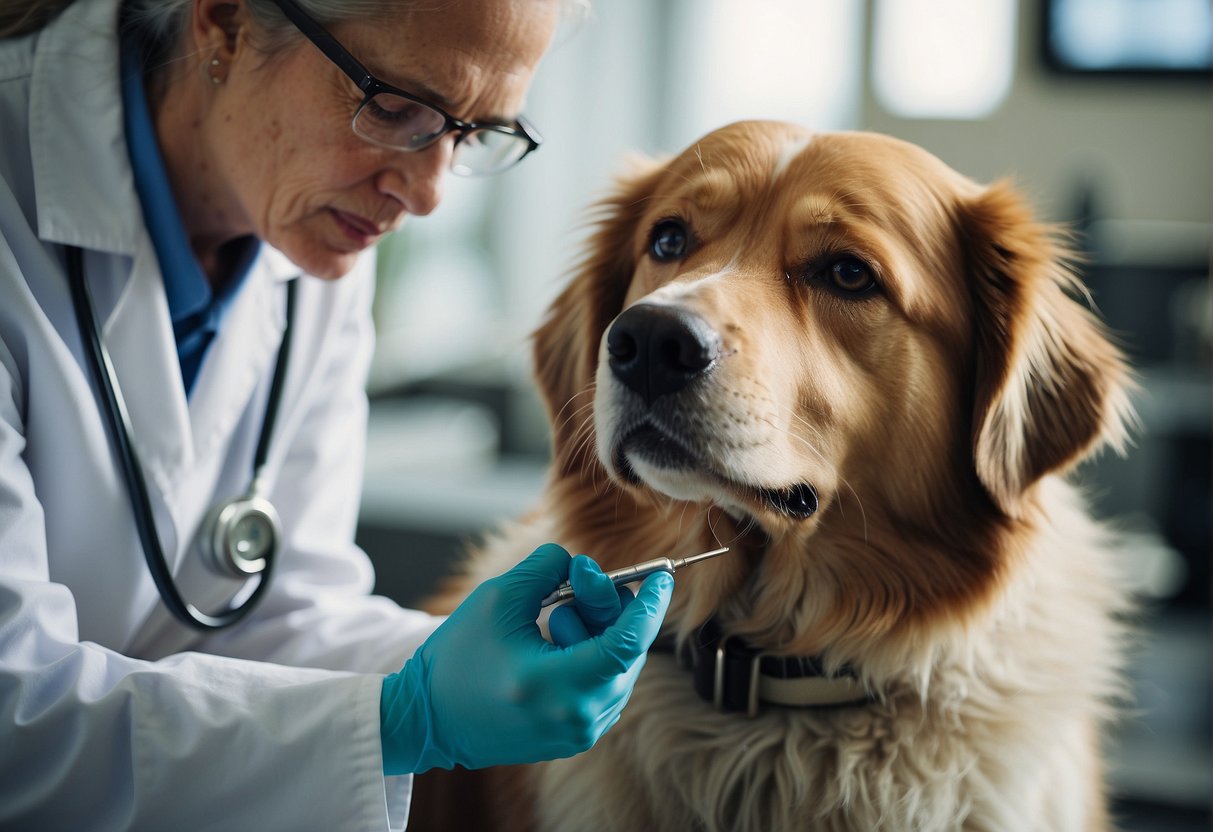
The management of Cushing’s disease in senior dogs typically involves medication, surgery, or a combination of both, aiming to control the overproduction of cortisol and improve the dog’s quality of life.
Medications and Their Effects
First-line treatments include the oral medications Trilostane and Mitotane.
- Trilostane (marketed as Vetoryl):
- Reduces cortisol production by inhibiting an enzyme involved in its synthesis.
- Must be continued indefinitely to manage symptoms.
- Tolerability and efficacy are monitored through regular vet visits.
- Mitotane (known as Lysodren):
- Directly destroys layers of the adrenal gland that produce cortisol.
- Typically used in a loading phase followed by a maintenance phase.
- Requires careful dosing and monitoring due to potential side effects.
Selegiline, an MAO inhibitor, is occasionally prescribed but is less common. Continuous veterinarian monitoring is essential for adjusting dosages and anticipating side effects.
Surgical Interventions
Surgery is considered when there is a defined adrenal tumor causing the disease. It can provide a definitive cure in cases where the tumor is benign and removable. Malignant tumors render a less favorable prognosis.
- Adrenalectomy: Removal of the affected adrenal gland.
- Transsphenoidal Surgery: Removal of pituitary tumors, less commonly performed.
For iatrogenic Cushing’s disease, caused by prolonged use of corticosteroids, the course of action usually involves gradually reducing the medication under veterinary supervision. If radiation therapy is available, it may be employed to treat pituitary-dependent cases, although its use is less widespread due to the requirement for specialized equipment and expertise.
Managing Cushing’s in Senior Dogs

In managing Cushing’s disease in senior dogs, the focus is on enhancing quality of life and managing symptoms through long-term care strategies and specific diet and lifestyle modifications.
Long-Term Care Approaches
Senior dogs diagnosed with Cushing’s disease typically require ongoing medical monitoring and care. The prognosis varies, but with proper management, a dog can live comfortably for years after diagnosis. Long-term care may include:
- Medication: Veterinarians often prescribe medications such as trilostane or mitotane to manage symptoms. These drugs must be carefully dosed and can have side effects, which necessitates regular veterinary appointments to monitor the dog’s response to treatment.
- Regular Testing: Frequent blood tests are essential to assess how well the dog is responding to medication and to adjust doses accordingly.
- Monitoring at Home: Caregivers should monitor their dogs for increased thirst, urination, appetite, and changes in activity levels, as these can be indicators of treatment effectiveness or side effects.
Diet and Lifestyle Modifications
Diet and exercise are crucial in supporting a dog with Cushing’s. Key modifications include:
- Nutrition: A balanced diet tailored to the needs of a senior dog with Cushing’s can help manage weight and support overall health. This may involve a formulated prescription diet with controlled portions to prevent obesity, a common issue in dogs with Cushing’s.
- Exercise: Regular, gentle exercise can help maintain muscle tone and combat the lethargy associated with Cushing’s. However, it’s critical to adjust activity levels to the dog’s ability, as older dogs may have joint issues or tire more easily.
- Environmental Comfort: Creating a comfortable environment with easy access to water, food, and resting places can help improve a senior dog’s quality of life. Cushioned bedding and warmth can be especially beneficial to older dogs.
By adhering to these management strategies, caregivers can help ensure that their senior dogs with Cushing’s disease maintain a good quality of life.
Complications and Comorbidities
Cushing’s disease in senior dogs can lead to a number of serious health issues. It is imperative for pet owners to be aware of these complications to ensure timely and effective management of the condition.
Common Health Concerns
Senior dogs with Cushing’s disease may experience a range of health concerns that arise from excessive production of cortisol. A prevalent complication is Skin Infections caused by a weakened immune system that makes the skin more susceptible to pathogens. Diabetes is another common comorbidity, as the imbalance of cortisol can affect the body’s ability to regulate blood sugar. Additionally, dogs with Cushing’s are at an increased risk of Urinary Tract Infections (UTIs), which may occur frequently.
The disease also has the potential to lead to:
- Blindness, often resulting from cataracts which can be exacerbated by high blood sugar levels.
- An elevated risk of Cancer, particularly with adrenal-dependent Cushing’s.
- High Blood Pressure (hypertension), complicating the overall health and potentially impacting organs like the heart and kidneys.
Monitoring and Preventing Complications
For owners of dogs with Cushing’s disease, proactive monitoring is crucial. Regular veterinary check-ups should include:
- Blood pressure measurements to detect high blood pressure.
- Tests for glucose levels to manage or preemptively address diabetes.
Preventive care can help avoid certain complications. Strategies include:
- A diet tailored to manage weight and blood sugar.
- Routine grooming and skin care to prevent Recurrent Skin Infections.
By understanding and addressing these comorbidities, owners can help maintain a better quality of life for their senior dogs with Cushing’s disease.
Choosing the Right Veterinarian

When a senior dog is suspected of having Cushing’s disease, it’s crucial to select a veterinarian with the right expertise. The vet’s experience with canine endocrinology and approach to client communication are essential factors to consider.
Specializations in Canine Endocrinology
Veterinarians with a specialization in endocrinology are highly recommended for diagnosing and treating conditions like Cushing’s disease. They possess an in-depth understanding of hormonal disorders and are more familiar with the latest treatments and diagnostic procedures. Dog owners should seek vets who have:
- Advanced training or board certification in veterinary internal medicine, particularly endocrinology.
- A track record of treating cases of Cushing’s disease, indicating practical experience.
What to Look For in a Vet
In selecting the right veterinarian for a senior dog with Cushing’s disease, owners should observe the following:
- Communication Skills: Clear explanations about the disease, diagnostic methods, and treatment options are vital. The vet should be able to articulate complex information in an understandable way.
- Facilities and Equipment: The vet’s clinic should have access to advanced diagnostic tools such as ultrasound and blood testing for accurate assessment.
- Treatment Philosophy: A vet that prioritizes a tailor-made treatment plan for each dog, considering the dog’s age, overall health, and the owner’s resources.
- Professional Network: The ideal vet stays connected with specialists and refers to them when necessary, ensuring a multidisciplinary approach to treatment.
Owners should also consider the vet’s approachability and willingness to answer questions, as managing Cushing’s disease in dogs is a long-term commitment requiring ongoing vet-owner collaboration.
Breed-Specific Considerations
Certain dog breeds are more susceptible to developing Cushing’s disease, particularly as they enter their senior years. It is important for owners of at-risk breeds to be aware of the condition and to understand the potential genetic predispositions at play.
At-Risk Breeds
The risk of Cushing’s disease can vary significantly across different dog breeds. Some breeds, due to their genetic makeup, may be more prone to developing the disease. Notable examples include:
- Poodles, especially Miniature Poodles
- Dachshunds
- Boston Terriers
- Boxers
Owners of these breeds should be vigilant for symptoms of Cushing’s disease as their pet ages.
Genetic Predispositions
The exact genetic mechanisms that predispose certain breeds to Cushing’s disease are not fully understood, but these predispositions are believed to contribute to the higher incidence rates seen in the breeds listed above. While any dog can develop Cushing’s disease, hereditary factors in these specific breeds may influence the likelihood of the condition, necessitating a more proactive approach to monitoring and care from their owners. This information reinforces the need for tailored health screenings and lifestyle adjustments for at-risk breeds to ensure early detection and intervention.
Advancements in Cushing’s Disease Research
Recent advancements in the scientific understanding and treatment of Cushing’s Disease in dogs have opened new avenues to better manage this complex endocrine disorder, particularly in senior dogs where it’s most prevalent. These include breakthroughs in pinpointing the underlying causes and refining treatment modalities.
Scientific Discoveries
Researchers have made significant strides in distinguishing between the two primary causes of Cushing’s Disease. Benign pituitary tumors account for the majority of cases, known as Pituitary-dependent hyperadrenocorticism (PDH), whereas adrenal gland tumors, which may be benign or malignant, cause adrenal-dependent hyperadrenocorticism (ADH). Differentiating between these causes is vital as it directs the course of treatment.
- Pituitary Tumors: The identification of pituitary gland tumor profiles has improved, allowing for more accurate diagnoses.
- Adrenal Gland Tumor: Advanced imaging techniques have enabled better visualization and characterization of adrenal gland tumors, influencing surgical approach.
Improvements in Treatment Methods
Treatment practices have evolved with a focus on both medical management and surgical intervention.
- Medical Management: Enhanced pharmaceutical options, targeting the reduction of cortisol production, have shown promise in controlling the symptoms associated with Cushing’s Disease.
- Surgical Removal: For tumors identified as operable, advancements in surgical techniques have increased the success rate of surgical removal.
- Radiation: In cases of inoperable or metastasized tumors, radiation therapy has been refined, showing improved outcomes in quality of life and longevity.
These progressive steps in research and clinical applications have demonstrated a commitment to improving the prognosis for dogs suffering from Cushing’s Disease.
Real-Life Stories and Case Studies
Cushing’s Disease, a condition in dogs characterized by excessive production of cortisol, often emerges in senior canines. Clinical signs such as lethargy, muscle weakness, and atrophy are commonplace. One notable case study involved a 10-year-old Beagle presenting with increased thirst and excessive panting. Despite these symptoms, a confirmed diagnosis was not immediately apparent, highlighting the disease’s subtle onset.
Another account from a pet owner describes their aged poodle’s gradual loss of energy. The once vibrant dog experienced a marked increase in lethargy, hinting at the underlying endocrine disorder. Subsequent examinations revealed adrenal gland dysfunctions, confirming Cushing’s Disease.
Veterinary case logs detail instances where older dogs faced challenges like muscle atrophy. Such muscular deterioration often correlates with weakened limbs, a struggle for afflicted animals. Clinicians utilize these narratives to aid early identification of the disease, a complex task given its overlapping symptoms with other age-related canine conditions.
Regular observations from owners are critical; dogs like a 9-year-old Dachshund, who began to excessively drink water, can be indicative of hormonal imbalances. Vigilance by the owner led to early therapeutic interventions, managing the disease’s progression and maintaining the dog’s quality of life.
As these stories illustrate, recognizing Cushing’s Disease demands attentiveness to nuances in a pet’s behavior and physical state. Careful monitoring of clinical signs can facilitate earlier detection and treatment, providing senior dogs a chance for a healthier, more comfortable life.
Frequently Asked Questions
Cushing’s disease in senior dogs often presents with a set of symptoms that raise concerns for pet owners. Insight on lifespan impact, treatment options, progression, and quality of life improvements is crucial for informed care strategies.
What symptoms indicate the onset of Cushing’s disease in canines?
The onset of Cushing’s disease in dogs is characterized by symptoms such as increased thirst and urination, loss of muscle strength, and a pot-bellied appearance. These signs may also be accompanied by skin problems and recurring infections.
How does Cushing’s disease affect the lifespan of senior dogs?
While Cushing’s disease itself is not solely responsible for determining a senior dog’s lifespan, it can contribute to a decline in overall health and may exacerbate other age-related issues. The impact varies depending on the dog and the severity of the condition.
What treatments are available for managing Cushing’s disease in older dogs?
Treatment options for Cushing’s disease in dogs include medications such as trilostane or mitotane for adrenal-dependent Cushing’s, and selegiline for pituitary-dependent cases. The FDA has approved these drugs for treating the respective forms of the disease.
What signs signify a dog is in the advanced stages of Cushing’s disease?
In advanced stages of Cushing’s disease, dogs may show more pronounced muscle weakness, a further increase in urination, hair loss, bruising, and a continued increase in abdomen size. They may also develop more severe complications like diabetes and skin infections.
How does Cushing’s disease typically progress in senior dogs?
Cushing’s disease generally progresses slowly in senior dogs, with cortisol levels increasing over time due to either pituitary or adrenal tumors. This leads to a gradual escalation of symptoms and potential secondary health complications.
Can therapeutic interventions improve the quality of life for older dogs with Cushing’s disease?
Yes, therapeutic interventions, including medication, specialized diets, and regular monitoring, can significantly improve the quality of life for older dogs with Cushing’s disease. Proper management of the condition helps to control the symptoms and can reduce the occurrence of secondary complications.